
01day-ahead and intraday
The wholesale market
Electricity is bought and sold hour by hour, the day before for the day after, then continuously until delivery. This is where the spread between off-peak and peak hours is captured.
The value chain
A battery of a few megawatt-hours is too small to stand alone before the transmission operator or on the wholesale market. An aggregator pools dozens of sites into a single portfolio, reaches the sizes and guarantees required, and passes back to each site what its contribution earned.
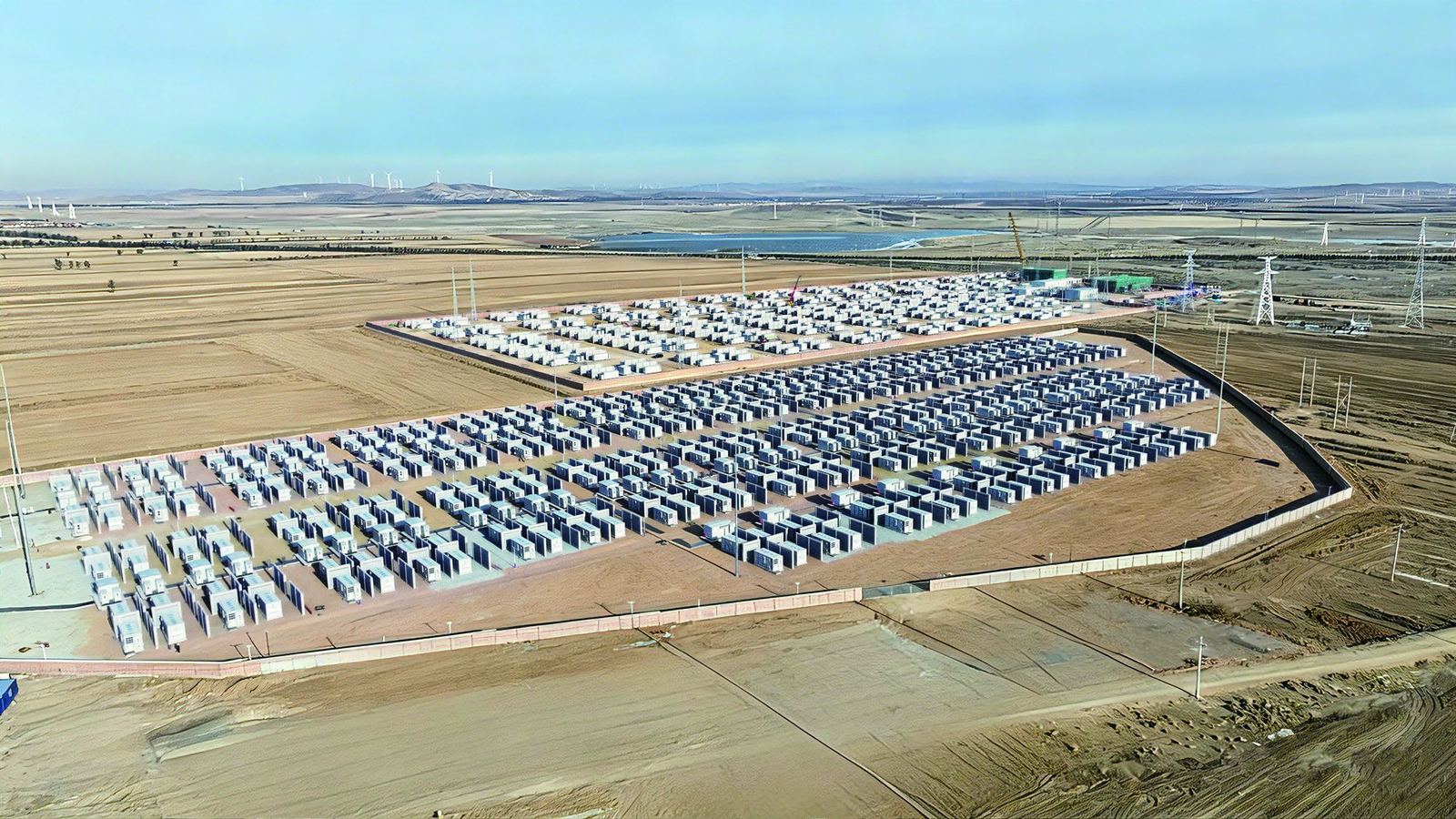
Grid-connected storage park — Inner Mongolia, 500 MW / 2 GWh
Where the value is paid
They are not chosen once and for all. The same capacity moves from one to another through the day, according to what each pays at that moment.
Electricity is bought and sold hour by hour, the day before for the day after, then continuously until delivery. This is where the spread between off-peak and peak hours is captured.
The transmission operator must keep production and consumption in balance at every instant. To do so it calls on the capacities that have declared themselves available — upward as well as downward.
Primary and secondary reserve: the fastest services on the grid, and the ones a battery is built for. It responds in seconds, where a thermal plant takes minutes.
Simply being there on high-demand days has a value of its own, independent of the energy actually delivered. Certified capacity is paid for being available.
The order of priority
The aggregator never has the whole battery at its disposal. The optimisation engine first reserves what the site requires — the contracted power that must not be exceeded, the surplus generation to absorb, the safety margin — and offers the portfolio only what is genuinely left.
That is what separates an industrial battery from a purely financial asset: it serves its site before it serves the grid, and the trade-off between the two is settled again every hour.
You — You set the frame: the power never to exceed, the untouchable time slots, the minimum state of charge to keep.
The control system — It turns that frame into an hour-by-hour schedule and decides what each available kilowatt-hour is used for.
The aggregator — It monetises what has been made available, on whichever market pays best at that moment.
JR Batteries — We size the asset so that the frame holds, and we remain the single point of contact for the project.
The cycle
Day-ahead, afternoon
The aggregator sends its price projections and the commitments taken for the portfolio. The optimisation engine turns them into the day's schedule: when to charge, when to discharge, how much to keep available.
On the day
The forecast is wrong, a workshop starts earlier, a price collapses. The control system recalculates continuously and departs from the schedule whenever departing earns more than it costs.
Second by second
If the capacity is committed to reserve, the battery responds to grid frequency without waiting for an instruction: the setpoint comes from the measurement itself.
End of month
Revenue from each market is reconciled, then passed on according to the contract between you and the aggregator.
The grid connection, the load profile and the size of the battery decide which markets are open — and therefore which partner is best placed to serve them. We settle this during sizing, before you commit.