
Technology · 8 October 2026
BESS: the battery energy storage system, part by part
A BESS (Battery Energy Storage System) stores energy in batteries: lithium cells assembled into modules and racks, a battery management system (BMS), a power conversion system (PCS) linking the battery to the AC grid, an energy management system (EMS), cooling and fire protection. Knowing how to read each part lets you compare two offers and size the system correctly.
By Élien Geneste
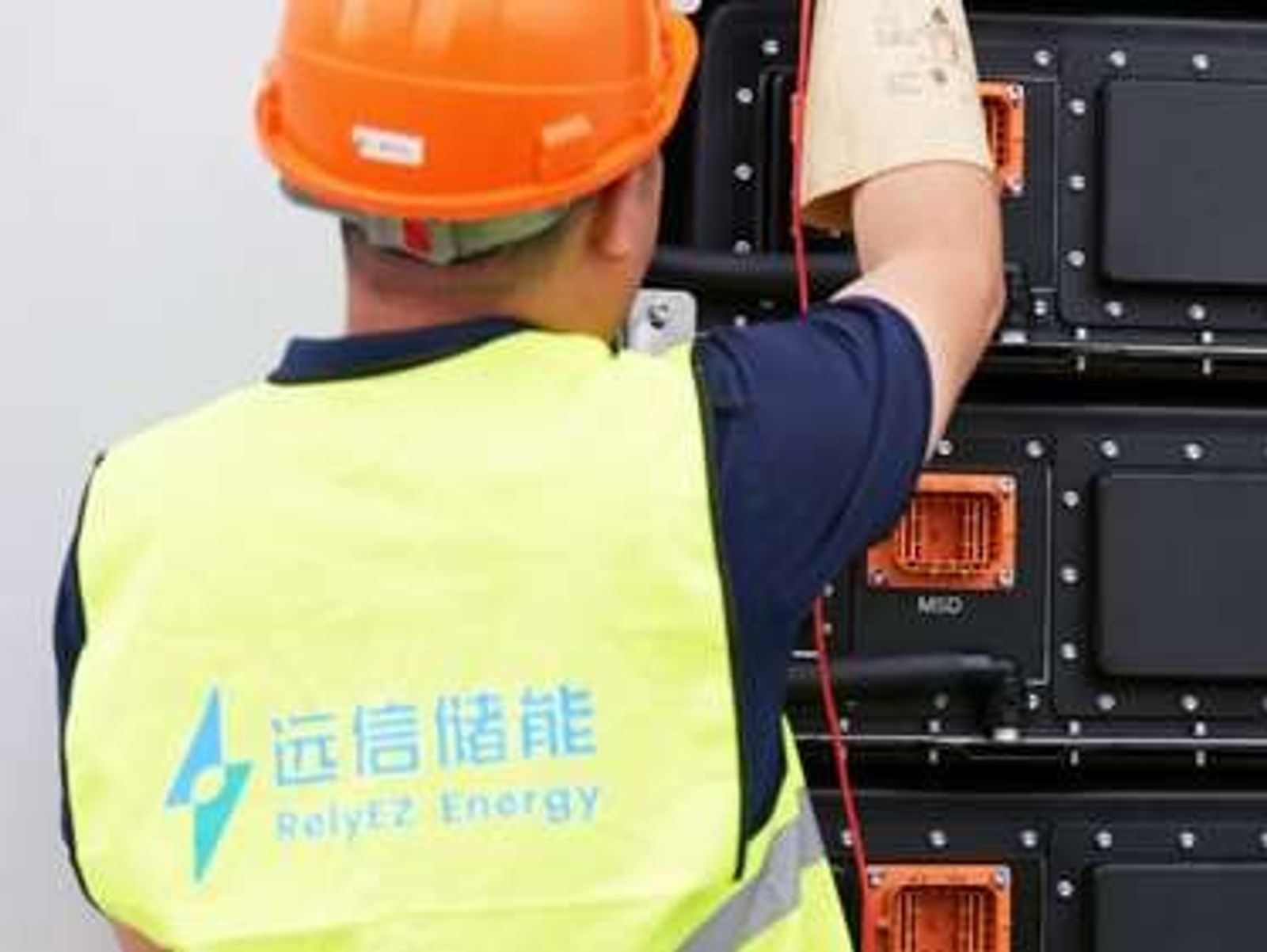
A BESS for energy storage (Battery Energy Storage System) stores electricity in batteries and releases it later: when the sun stops producing, when the site draws a power peak, or when the grid needs it. Behind the acronym lies an assembly of parts, each with its own role and its own selection criteria. This article reviews them, from the cell to the control system, with figures from the RelyEZ datasheets for the products we distribute.
What exactly is a BESS?
French law defines energy storage in Article L. 352-1 of the Energy Code, quoted by the Commission de régulation de l'énergie (the French energy regulator) in its decision of 7 April 2022: it is the deferral of the final use of electricity to a time after the one at which it was produced.
A BESS performs this role with electrochemical batteries. The term means the complete system, not just the batteries. A professional BESS brings together these parts:
| Role | What to check | |
|---|---|---|
| Cells | store the energy | chemistry, capacity, number of cycles |
| Modules and racks | connect the cells in series and in parallel | voltage, capacity, ingress protection |
| BMS | monitors and protects the cells | monitoring levels, alarms |
| PCS | converts DC to AC and back | power, efficiency, grid standards |
| EMS | decides when to charge and discharge | uses controlled, communication |
| Cooling | keeps the cells at the right temperature | air or liquid, difference between cells |
| Fire safety | detects and suppresses | detectors, suppression, tests |
The following sections take these parts one by one.
What is the battery itself made of?
The cell
The cell is the basic building block. In stationary storage, the most widespread chemistry is lithium iron phosphate (LFP), chosen for its thermal stability and its cycle life. At RelyEZ, the VenturePro and GridUltra ranges use prismatic LFP cells. The VenturePro 250 datasheet specifies 314 Ah cells and a life of at least 8,000 cycles.
The module and the rack
Cells are grouped into modules, and modules into racks. Connecting in series sets the voltage; connecting in parallel sets the capacity. Two examples from the RelyEZ datasheets:
| VenturePro 250 | GridUltra 5.016 MWh | |
|---|---|---|
| Cells per module | 52 prismatic LFP | 52 prismatic LFP |
| Modules | 5, in a single rack | 8 per rack, 12 racks |
| Configuration | 1P260S | 12P416S |
| Nominal energy | 250 kWh | 5,015.961 kWh |
| Nominal voltage | 832 V DC | 1,331.2 V DC |
The reading is the same in both cases: 260 cells in series in the cabinet, 416 in series per rack in the container, and 12 racks in parallel to reach the capacity. The VenturePro 250 battery pack is rated IP 67, like the GridUltra modules.
What does the BMS do?
The BMS (Battery Management System) continuously measures the voltage, current and temperature of the cells. It calculates the state of charge, balances the cells against each other and opens the circuit if a value goes outside the permitted range. It also passes alarms to the rest of the system: on the VenturePro, for example, the smoke, temperature and combustible gas detectors send their signal to the BMS, which triggers the audible and visual alarm.
Two questions to ask a supplier: down to what level does the BMS monitor (cell, module, rack), and how is the data made available (protocols, remote monitoring)? The VenturePro 250 communicates over CAN and Modbus TCP/RTU.
What does the PCS do, and is it always included?
A battery works in direct current; a site and the grid work in alternating current. The PCS (Power Conversion System) converts in both directions: it charges the battery and discharges it. Its power sets how fast the system can exchange energy.
This is where two offers differ the most:
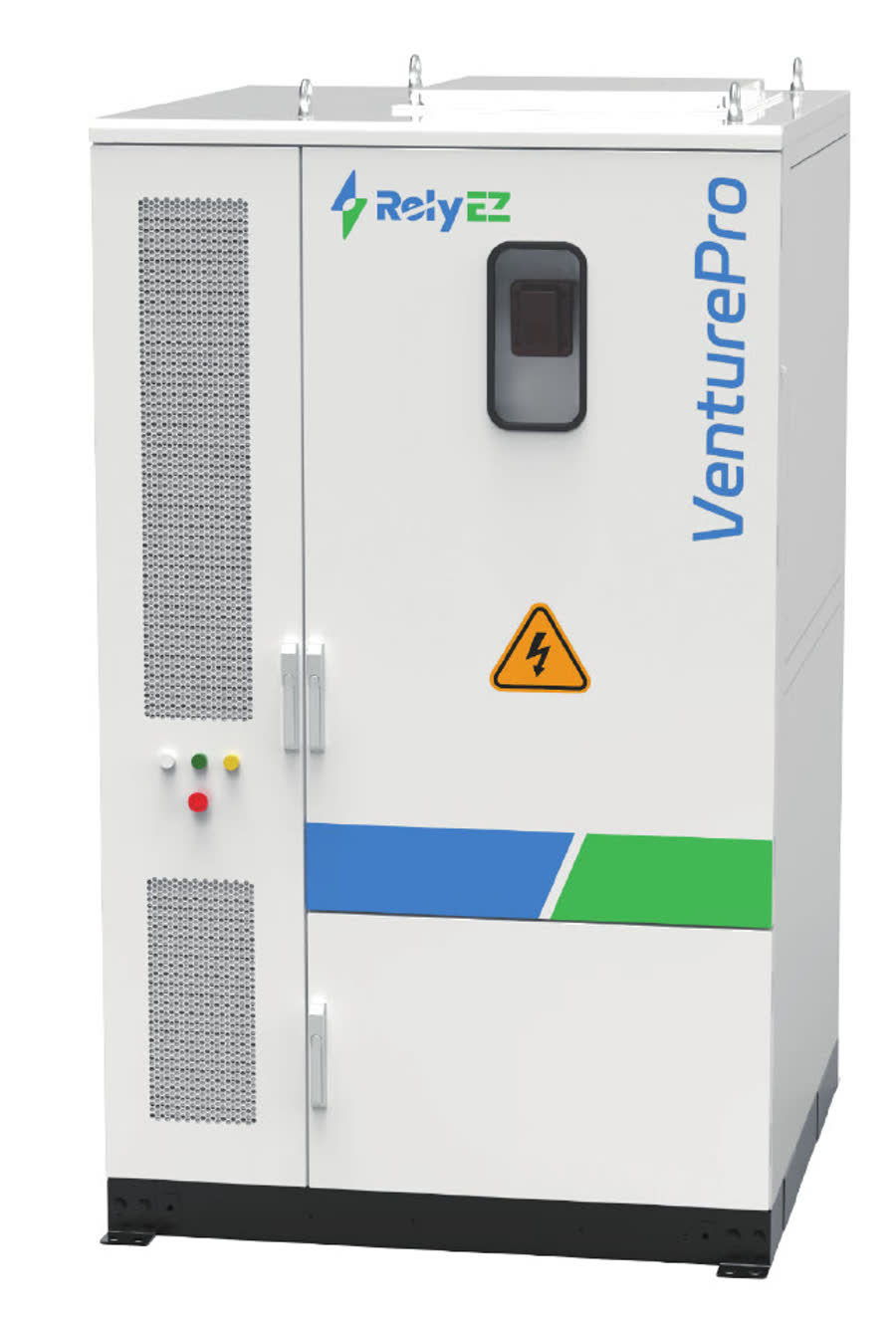
- The all-in-one cabinet includes its PCS. The VenturePro 250 delivers 125 kW at 400 V AC, with a switchover time between charging and discharging of less than 20 ms, and a maximum AC efficiency of 90 % excluding auxiliary consumption, according to its datasheet.
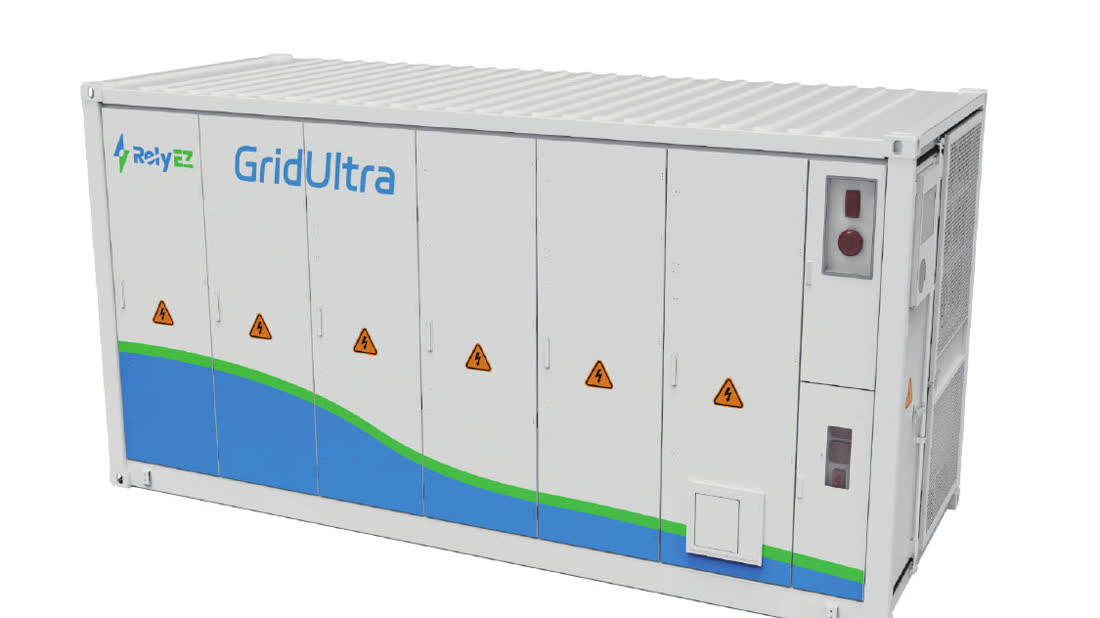
- The high-capacity container is often a direct-current block. The GridUltra datasheet describes it as a DC container: 2,500 kW rated charge and discharge power for the 5.016 MWh version, and a round-trip efficiency of 93 % at beginning of life, measured on the battery side. The converter and transformer are separate equipment, chosen with the grid connection.
The two efficiencies therefore cannot be compared directly: one includes conversion, the other does not. Before comparing prices, check what each offer includes.
The ratio between power and energy can be read in the « 0.5P » or « 0.25P » designation: the GridUltra 5.016 MWh (0.5P) discharges in about two hours at rated power, the 4.18 MWh (0.25P) in four hours. To choose this ratio according to the site's uses, see our method for sizing a commercial battery storage system.
Who decides when the battery charges and discharges?
The EMS (Energy Management System) is the brain of the BESS. It receives the site's measurements (consumption, solar production, subscribed power), price or grid signals, and gives instructions to the PCS. A single EMS can chain several uses in one day: storing the solar surplus at midday, shaving a consumption peak in the late afternoon, standing ready for a grid service. According to RelyEZ's documentation, its EMS collects and stores data, manages alarms and reports, and can control several storage units at once.
To earn revenue from the battery on the electricity markets, the EMS works with an aggregator: that is the role of our aggregator offer.
Air or liquid: why does cooling matter?
A lithium cell ages faster when it runs hot, and cells at different temperatures age unevenly. Cooling therefore serves service life as much as safety.
- Air cooling: fans and air conditioning circulate the air in the container. This is the case for RelyEZ's GridUltra 2058.
- Liquid cooling: a fluid circulates in contact with the modules. The GridUltra datasheet states a temperature difference between cells of less than 3 °C. The VenturePro 250 is also liquid-cooled and operates from -30 °C to 55 °C, at reduced power below -15 °C and above 45 °C.
Cooling itself consumes energy: this is the « auxiliary power » line on the datasheets, up to 45 kW for the GridUltra 5.016 MWh. It counts in the site's real efficiency.
How is a BESS protected against fire?
Fire safety rests on three layers: cell chemistry, detection and suppression. The VenturePro documentation describes dual protection: active detection (smoke, temperature, hydrogen) linked to the BMS, and an aerosol fire-suppression generator that triggers on its own under heat inside the cabinet, complemented by explosion relief panels.
Testing matters as much as equipment. The RelyEZ datasheets list, among others, IEC 62619 for cell safety, UL 9540A, a thermal propagation test, and UL 9540 at system level. These documents are provided as part of a project: they are used by the inspection body, the insurer and the local fire and rescue service.
Cabinet or container: which format for which site?
| All-in-one cabinet | Container | |
|---|---|---|
| RelyEZ example | VenturePro 250 | GridUltra |
| Energy | 250 kWh per cabinet, expandable in parallel on the AC side | 4.18 or 5.016 MWh per container |
| Converter | built in (125 kW) | separate |
| Footprint | 1.35 × 1.40 × 2.25 m, 3.5 t at most | non-walk-in container |
| Typical sites | industry, offices and retail, agriculture, EV charging | solar plants, large sites, grid |
Between the two, the VenturePro Fusion is modular: a control cabinet manages one to eight battery cabinets, from 0.261 to 3.344 MWh according to its datasheet, with a converter provided separately. The right format follows from the uses, the space available and the grid connection.
Where to start?
A BESS is chosen from the site, not from the catalogue: load curve, solar production, connection capacity, space available. That is the starting point of our project assessment, which leads to a detailed configuration, part by part, that you can compare with other offers. The datasheets for each range are in the catalogue, and the cell technology is described on the RelyEZ technology page.
Frequently asked questions
What does BESS stand for?
BESS stands for Battery Energy Storage System. The term covers the whole installation, not just the batteries: the converter, cell management, control system, cooling and fire safety are all part of it. French law speaks of « energy storage in the electricity system » (Article L. 352-1 of the Energy Code).
What is the difference between a BMS, a PCS and an EMS?
The BMS monitors the cells (voltage, temperature, state of charge) and protects the battery. The PCS is the converter that turns the battery's direct current into alternating current, and back again. The EMS decides when to charge and discharge, according to the site's uses: peak shaving, solar surplus, markets.
Why do most BESS use LFP cells?
Lithium iron phosphate (LFP) chemistry is chosen for its thermal stability and cycle life. RelyEZ's VenturePro and GridUltra ranges use prismatic LFP cells, with a stated life of at least 8,000 cycles on their datasheets. The choice of chemistry also depends on the use and the space available.
Does a BESS always include its inverter?
No. An all-in-one cabinet such as the VenturePro 250 includes its 125 kW PCS. A high-capacity container such as the GridUltra is a direct-current block: the converter and transformer are separate equipment, chosen with the grid connection. So check what each offer includes before comparing prices.
How long does a BESS last?
The GridUltra datasheet states more than 8,000 cycles and a design life of up to 15 years; the VenturePro 250 datasheet states at least 8,000 cycles. Actual life depends on the number of cycles per year, the depth of discharge and the temperature. The RelyEZ manufacturer's warranty is 5 years as standard, with an optional extension from 6 to 15 years.
Sources
The figures in this article come from these documents.
- Délibération n° 2022-105 du 7 avril 2022 portant avis sur le projet de décret fixant les modalités de la procédure d'appel d'offres portant sur le développement de capacités de stockage d'électricité (rappel de l'article L. 352-1 du code de l'énergie) — Commission de régulation de l'énergie, 7 April 2022
- Fiche technique VenturePro Series 250 kWh — All-in-one Liquid-Cooled Energy Storage — RelyEZ, 27 August 2026
- Fiche technique gamme GridUltra 4,18 MWh (0.25P) et 5,016 MWh (0.5P) — stockage conteneurisé à refroidissement liquide — RelyEZ, 27 August 2026
- Fiche technique VenturePro Fusion — Liquid-Cooled Modular Battery Cabinet System — RelyEZ, 27 August 2026
The ranges mentioned
A project in mind?
The grid connection, the contract and the generation already in place are enough to know which range fits.