
Sizing · Regulation · 6 October 2026
Exceeding subscribed power: shaving peaks with a battery
Above 36 kVA, every overrun of the subscribed power is billed by the grid operator: since 1 August 2026, €12.79 per hour of overrun and per time band in low voltage, and a formula that penalises high peaks in HTA (medium voltage). A battery supplies the peak instead of the grid. It is sized on the height and duration of the peaks, read from the site's load curve.
By Élien Geneste
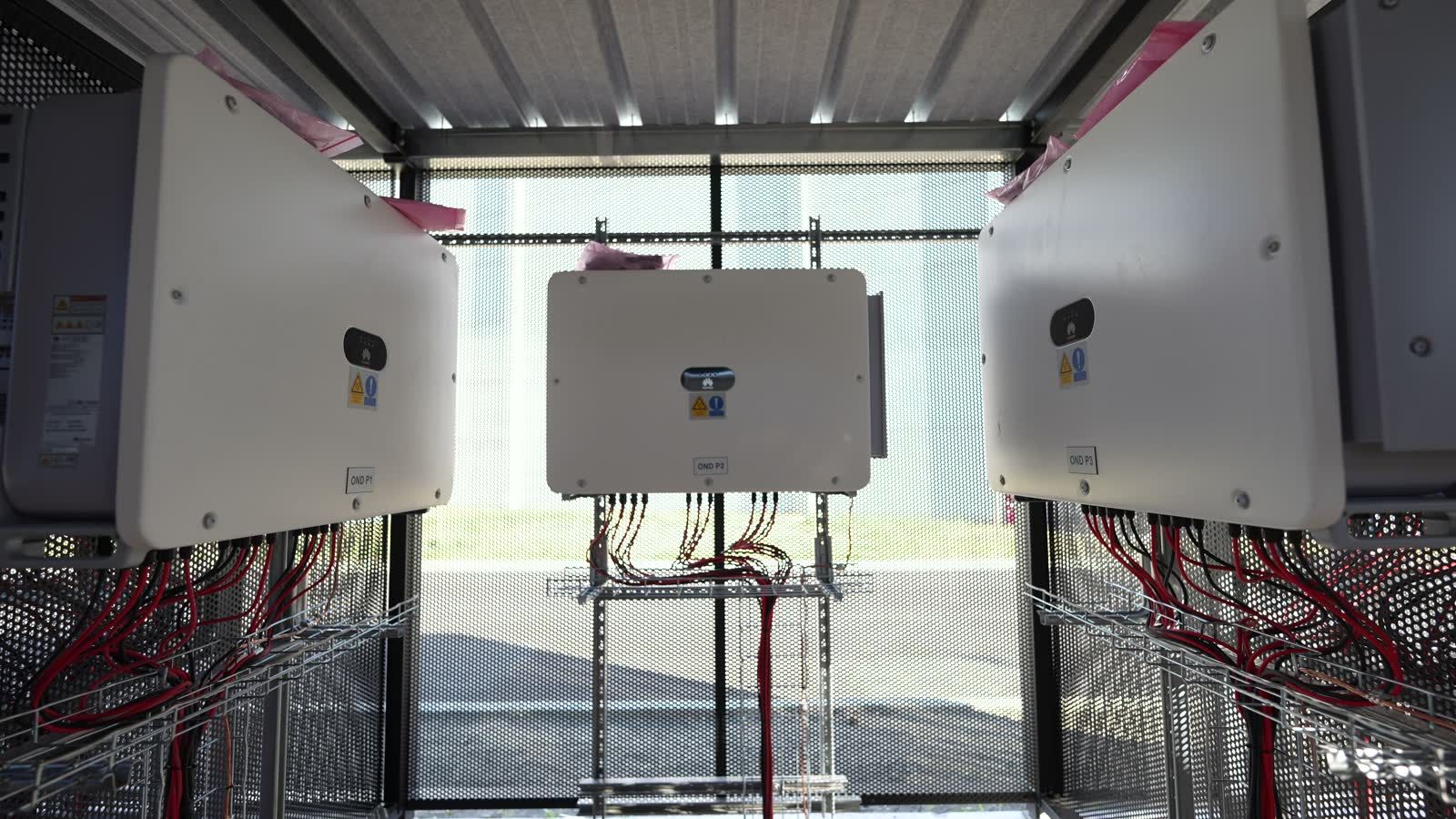
Exceeding the subscribed power happens every time a site draws more power from the grid than its network access contract provides for. Above 36 kVA, it does not cut the supply: it is billed every month. This article explains how the network tariff calculates this charge since 1 August 2026, which responses exist, and how a storage battery is sized to shave the peaks.
What is subscribed power, and when is it exceeded?
Subscribed power is the maximum power the site reserves on the public grid, per time band. It is chosen in the network access contract and sets a large part of the network bill: the annual withdrawal component of the TURPE, the network tariff set by the French energy regulator (CRE), is proportional to the subscribed powers.
The number of powers to choose depends on the voltage level:
- Low voltage above 36 kVA (offices, shops, SMEs): four time bands, peak and off-peak hours in the high season and in the low season. Powers are chosen in multiples of 1 kVA and cannot decrease from one band to the next.
- HTA (industrial sites connected in medium voltage): five time bands, including a peak band.
- Low voltage of 36 kVA or less: power is limited by the circuit breaker or the smart meter. An excessive draw cuts the supply; the Enedis brochure states that overruns do "not apply" there.
An overrun occurs when the power drawn exceeds the subscribed power of the current time band: several machines starting at once, an air-conditioning peak in summer, electric vehicles charging at the end of the day, a furnace or compressor starting up.
How much does exceeding the subscribed power cost?
The cost appears on the bill as CMDPS, the monthly component for exceeding subscribed power. How it is calculated depends on the voltage level. The values below are those of the TURPE 7 HTA-BT in force at 1 August 2026 (Enedis brochure, CRE decision of 21 May 2026).
| CMDPS calculation | What counts | |
|---|---|---|
| LV > 36 kVA | €12.79 × h, for each time band of the month | The total duration of overrun, in hours |
| HTA | sum over the time bands of 0.04 × b × √(ΣΔP²) | The size of the overruns, measured in 10-minute steps |
| LV ≤ 36 kVA | not applicable | The circuit breaker cuts the supply |
In low voltage above 36 kVA: duration
The charge is counted in hours. An overrun of a few kilovolt-amperes costs as much, per hour, as an overrun of several dozen. When control is based on active power, the subscribed power taken into account is the apparent power multiplied by 0.93.
The brochure provides for a cap on request to the grid operator: when the month's CMDPS exceeds both 30 % of the monthly TURPE bill and 25 times the tariff for the additional power that would have had to be subscribed to avoid any overrun, it is brought down to the higher of these two limits. It is a safety net, not a way of managing the site.
In HTA: size
In HTA, each overrun ΔP (in kW) is recorded every 10 minutes. The overruns are squared and added up, then the square root of the sum is multiplied by 0.04 and by the power coefficient b of the time band. For the HTA short-use tariff with fixed peak, this coefficient is €14.85/kW/year in peak hours at 1 August 2026.
Squaring has a direct consequence: one high peak weighs more than several small ones. Reducing the height of the peaks is therefore the first lever, before their number.
Raise the subscribed power, shift uses or shave peaks?
Three responses exist, and they are often combined.
- Raise the subscribed power. The overruns disappear, but the withdrawal component increases all year round, for a peak that sometimes lasts only a few tens of minutes. And beyond the connection capacity, the increase may require works on the connection.
- Shift uses. Stagger machine start-ups, schedule vehicle charging or preheating. This is the simplest response when the process allows it.
- Shave peaks with a battery. The battery supplies the part of the peak that exceeds a chosen threshold. Seen from the grid, the site no longer exceeds its power: depending on the shape of its curve, it may even subscribe a lower power.
The choice between these options is made on the load curve, not on a general rule. Long, regular overruns often call for a better-adjusted subscribed power; short, high peaks lend themselves well to peak shaving.
How does a battery shave peaks?
The battery's energy management system (EMS) continuously measures the power at the delivery point. It follows a setpoint: a threshold slightly below the subscribed power of the current time band.
- As long as the site consumes less than the threshold, the battery does nothing, or recharges.
- As soon as consumption crosses the threshold, the battery discharges the difference, within moments.
- When the peak subsides, the battery recharges, preferably in off-peak hours and always below the threshold, so as not to create a new peak itself.
The threshold changes with the time bands, since the subscribed powers differ. The control system follows it automatically.
How do you size a battery to shave peaks?
The method follows our guide to sizing a commercial storage battery, applied to peak shaving.
1. Read the load curve
The load curve in 10-minute steps can be downloaded from the Enedis business customer area. Twelve months are needed to see the high and low seasons, and the time bands where overruns are concentrated.
2. Set the threshold
The threshold is the power the site must no longer exceed as seen from the grid. The lower it is, the more powerful the battery must be and the harder it works. Several thresholds are usually compared.
3. Derive the battery's power
The battery's power is the gap between the highest observed peak and the threshold, with a margin for future peaks (new machines, charging points).
4. Derive the energy
The energy is the largest area of the curve above the threshold in a single day, in kWh, divided by the usable depth of discharge, plus a margin. Worked example: a peak that exceeds the threshold by 100 kW for 30 minutes requires 100 kW and 50 kWh usable; three similar peaks in the day, with no recharge between them, require 150.
5. Check the recharge
Between two peaks, the battery must recover enough energy without itself exceeding the threshold. On a site where peaks follow one another closely, this criterion often sets the size.
| Read from | Sets | |
|---|---|---|
| Highest peak | Load curve, 12 months | The power (kW) |
| Duration and area of the peaks | Load curve, busiest day | The energy (kWh) |
| Time between two peaks | Load curve | The recharge capacity |
| Subscribed power per time band | Network access contract | The threshold |
Which range for a commercial site?
Peak shaving calls for power more than energy: short peaks are handled by a battery with a high power-to-energy ratio.
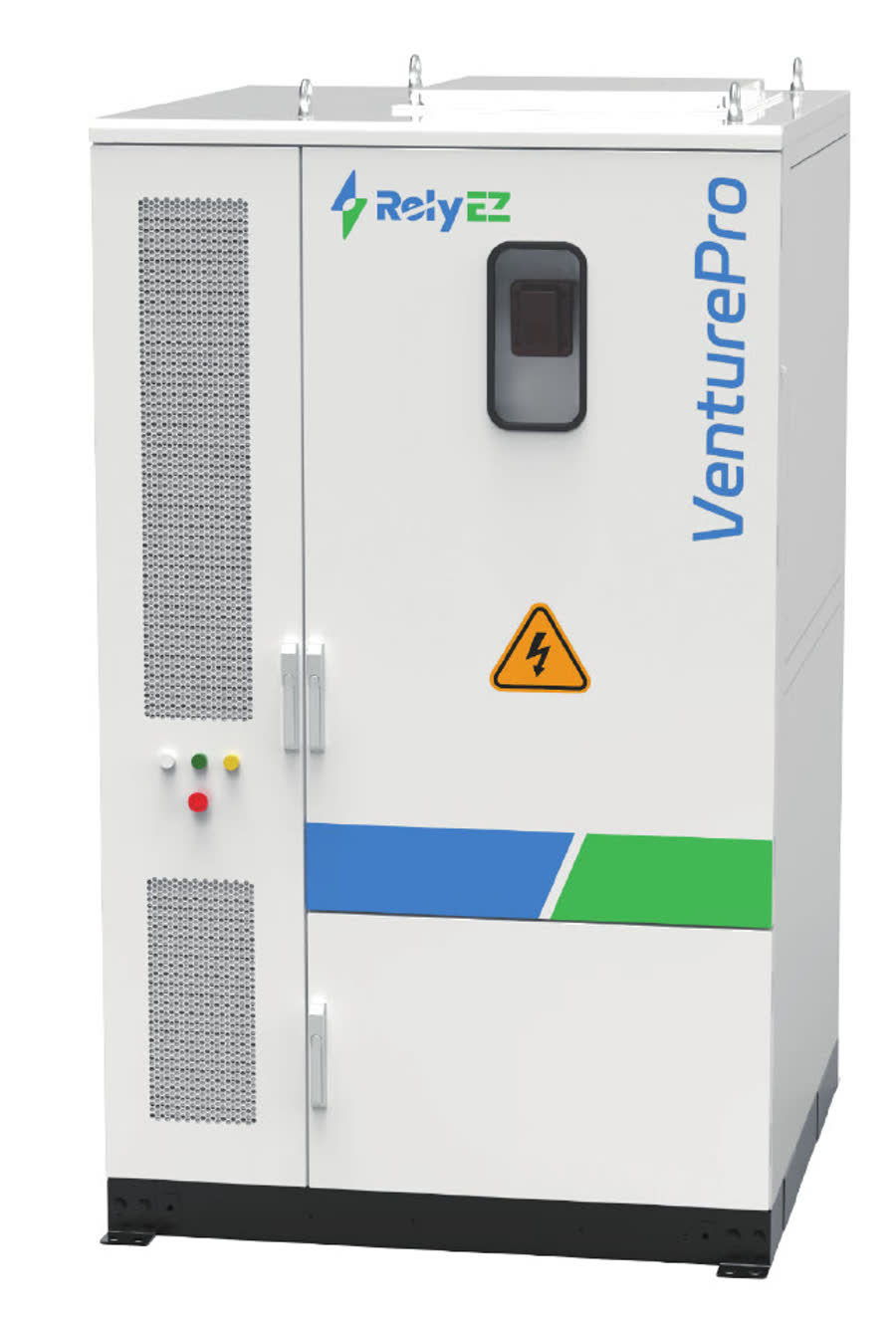
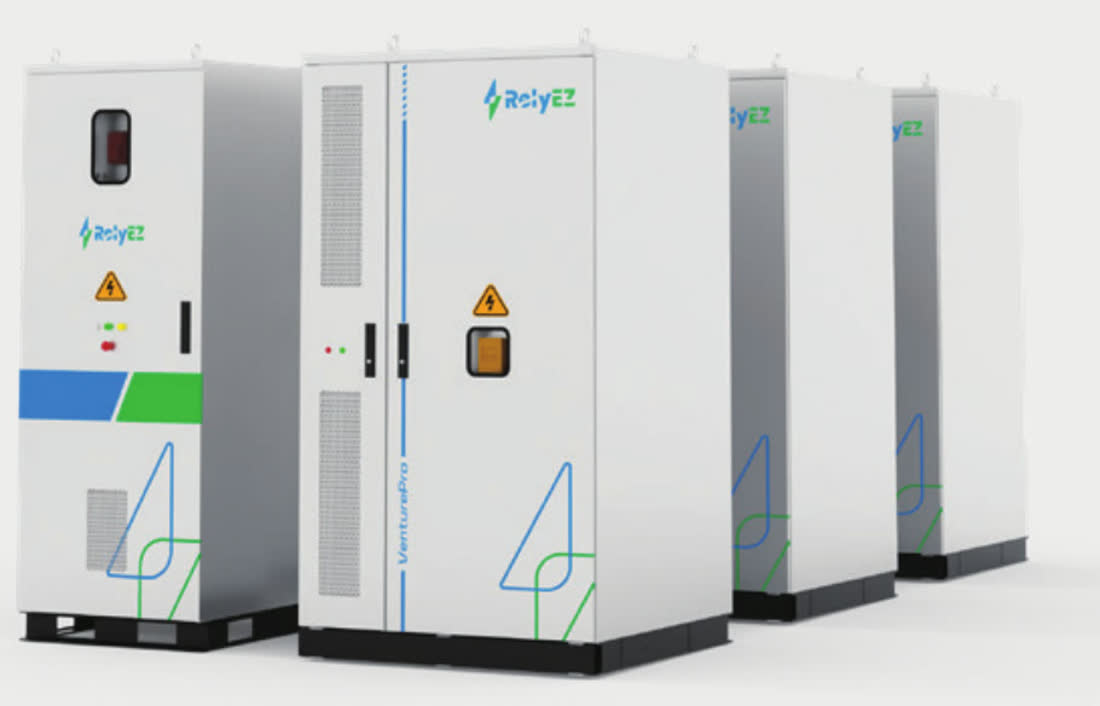
- The VenturePro range: one cabinet delivers 125 kW and stores 250 kWh, i.e. two hours at full power (RelyEZ datasheet). Up to twelve cabinets connect in parallel on the same 400 V bus.
- The Fusion 2 range: one control cabinet manages one to eight battery cabinets, from 261 kWh and 130.6 kW up to 3.34 MWh. The system grows by adding cabinets, if the site adds charging points or electrifies a process.
For a charging station whose peak exceeds the available connection, the case is covered separately on our page dedicated to fast charging.
Where to start?
Three documents are enough for an initial assessment:
- the load curve over twelve months;
- recent network bills, which show the subscribed powers and the CMDPS line;
- the list of projects that will change consumption: charging points, new machines, extension.
From these data, we compare the three responses, adjusted subscribed power, shifted uses or peak shaving, and several battery sizes. The value of a peak-shaving battery lies in sizing it right: powerful enough to hold the peak, with no energy tied up needlessly. You can request an assessment with these documents.
Frequently asked questions
How much does exceeding the subscribed power cost?
In low voltage above 36 kVA, the monthly overrun component is €12.79 per hour of overrun, for each time band of the month (Enedis tariff at 1 August 2026). In HTA, it depends on the size of the overruns measured every 10 minutes and on the power coefficient of the time band: high peaks weigh more than small ones. The line appears on the bill as CMDPS.
Does a site of 36 kVA or less pay for overruns?
No. At 36 kVA or below, power is limited by the circuit breaker or the smart meter: an excessive draw cuts the supply instead of being billed. The Enedis tariff brochure states that overruns do not apply to these connection points. A battery can then prevent the cut-off rather than a charge.
Is it better to raise the subscribed power or install a battery?
It depends on the shape of the peaks. Long, frequent overruns often call for a better-adjusted subscribed power; short, high peaks lend themselves to peak shaving, because a battery with enough power and modest energy absorbs them. The load curve over twelve months makes it possible to compare the two options, and to combine them.
What size of battery is needed to shave peaks?
The battery's power is set by the gap between the highest peak and the target threshold; its energy by the largest area of peaks above that threshold in a single day, with a margin. You also need to check that it has time to recharge between two peaks. A VenturePro cabinet, for example, delivers 125 kW and stores 250 kWh.
Can a peak-shaving battery do anything else?
Yes. Between two peaks, the same battery can store the surplus from a solar plant or shift part of the consumption to off-peak hours. The control system then reserves part of the energy for peak shaving, which remains the priority if it is the site's main use.
Sources
The figures in this article come from these documents.
- Tarifs en vigueur au 1er août 2026 — TURPE 7 HTA/BT, tarifs d'utilisation des réseaux publics de distribution d'électricité — Enedis, 1 August 2026
- Délibération n° 2026-105 du 21 mai 2026 portant décision sur l'évolution au 1er août 2026 de la grille tarifaire des TURPE dans les domaines de tension HTA et BT — Commission de régulation de l'énergie, 21 May 2026
- Délibération n° 2025-78 du 13 mars 2025 portant décision sur le tarif d'utilisation des réseaux publics de distribution d'électricité (TURPE 7 HTA-BT) — Commission de régulation de l'énergie (Légifrance), 13 March 2025
- J'accède à mes données de consommation et de production d'électricité (professionnels et entreprises) — Enedis, 30 September 2026
- Fiche technique VenturePro Series 250 kWh — RelyEZ, 27 August 2026
- Fiche technique VenturePro Fusion — Liquid-Cooled Modular Battery Cabinet System — RelyEZ, 27 August 2026
The ranges mentioned
A project in mind?
The grid connection, the contract and the generation already in place are enough to know which range fits.