
Revenue and markets · 13 October 2026
Capacity mechanism, FCR, aFRR: how a battery earns revenue
Capacity mechanism, primary reserve (FCR), secondary reserve (aFRR), wholesale market: a battery can earn revenue from several sources, and they do not pay for the same thing. The capacity mechanism pays for availability on stress days, and its rules change on 1 November 2026; the reserves pay for a response within seconds. Here is what each one requires, and what that changes when sizing the battery.
By Élien Geneste
The capacity mechanism is only one of the ways a storage battery earns revenue in France. It can also sell its responsiveness to RTE, through the FCR and aFRR frequency reserves, and capture the price gap between off-peak and peak hours. Each one pays for a different service, under different rules. This article goes through them one by one, based on texts from RTE and the French Energy Regulatory Commission (CRE), then explains what this changes when sizing the battery for a commercial or industrial site.
On which markets does a battery earn revenue?
A grid-connected battery provides four services, also described on our page on the role of the aggregator:
| What is paid for | Time frame | Buyer | |
|---|---|---|---|
| Wholesale market | Energy, bought at low-price hours and sold at high-price hours | day-ahead and intraday | market participants |
| Balancing mechanism | Upward or downward modulation, on request | real time | RTE |
| Frequency reserves (FCR, aFRR) | Power held ready, and the energy activated | from one second to a few minutes | RTE |
| Capacity mechanism | Availability on winter stress days | the delivery period, from November to March | RTE, since the reform |
These sources are not all mutually exclusive: the same battery can serve several of them over the year, provided the same power is never committed twice at the same time. The French fleet is growing fast: 1 617 MW of batteries were connected at the end of 2025, including 410 MW commissioned during the year, according to the Renewable Electricity Overview published by SER, RTE, Enedis and Agence ORE.
The capacity mechanism: what does it pay a battery for?
The capacity mechanism pays operators of generation, storage and demand-response capacity who commit to being available when the power system is under stress. Its aim is to meet the security-of-supply standard set by the State: an average loss-of-load duration of less than three hours a year.
A reform that applies from 1 November 2026
The former decentralised mechanism ends in 2026. The 2025 Finance Act reformed it, decree no. 2025-1441 of 31 December 2025 set out the details, and the European Commission approved the new scheme on 22 December 2025, for ten years: from 1 November 2026 to 31 March 2036. These steps are set out by the CRE in its deliberation no. 2026-24 of 27 January 2026, its opinion on the draft rules submitted by RTE.
What changes:
- RTE becomes the buyer: it contracts the capacity need itself, on a demand curve set by the minister on the CRE's proposal;
- payments are funded by a levy paid by suppliers, large consumers who buy directly on the markets, and grid operators for their losses;
- at most two auctions are held for each delivery period, one four years ahead (PL-4), the other one year ahead (PL-1);
- the auctions are pay-as-clear: all selected capacity receives the same price, that of the last accepted offer;
- the draft rules provide for a clearing price reserved for low-carbon flexibility, a category that includes batteries.
How a battery is certified
Before any auction, capacity is grouped into a "certification entity". Under the standard method described by the CRE, the certified volume is the product of three terms:
- the available power the operator declares for stress hours;
- a technology coefficient, reflecting the gap between observed availability and actual availability during a supply shortfall;
- a storage constraint coefficient, calculated from the maximum energy the battery can deliver per day and per week, using a chart published by RTE.
This third term matters most for a battery: at equal power, a battery that lasts longer contributes more to security of supply. Two other rules matter for a commercial site: capacity below 1 MW must be aggregated into an entity of at least 1 MW, and certified capacity must be offered at the auction following its certification.
What the commitment involves
The delivery period runs from 1 November to 31 March. During that period, RTE can signal up to 22 stress days, 6 of them between November and December, the day before at 9:30 or from D-2 before noon. An orange or red EcoWatt day counts as one. During these windows, the battery must be available up to its commitment; any gap between the measured available volume and the contracted volume leads to a financial settlement.
What is FCR, the primary reserve?
FCR (frequency containment reserve) is the fastest service on the European grid. The battery responds on its own to the measured frequency, without waiting for an instruction. RTE's system services rules, approved by the CRE, set the curve to follow: 50 % of the expected power within 15 seconds, 100 % within 30 seconds, with the same performance upwards and downwards.
For a battery, which the rules call a "limited energy reservoir", two requirements weigh on sizing:
- it must be able to deliver its reserve for at least 15 minutes when the grid is in an alert state;
- it must restore equivalent capacity no later than 2 hours after that alert state ends.
FCR is procured the day before, through a joint European tender (the "FCR Cooperation"), in 4-hour blocks. The minimum bid is 1 MW.
What is aFRR, the secondary reserve?
aFRR (automatic frequency restoration reserve) takes over from FCR to bring the frequency back to 50 Hz. This time, the battery follows a signal sent continuously by RTE. The full activation time has been 300 seconds since 18 December 2024.
RTE procures aFRR capacity the day before, by tender, per hour or over consecutive hours, with a minimum bid of 1 MW. Activated energy is paid separately, over 15-minute periods. Since 2 April 2025, RTE has been connected to the European PICASSO platform, which pools aFRR energy between grid operators.
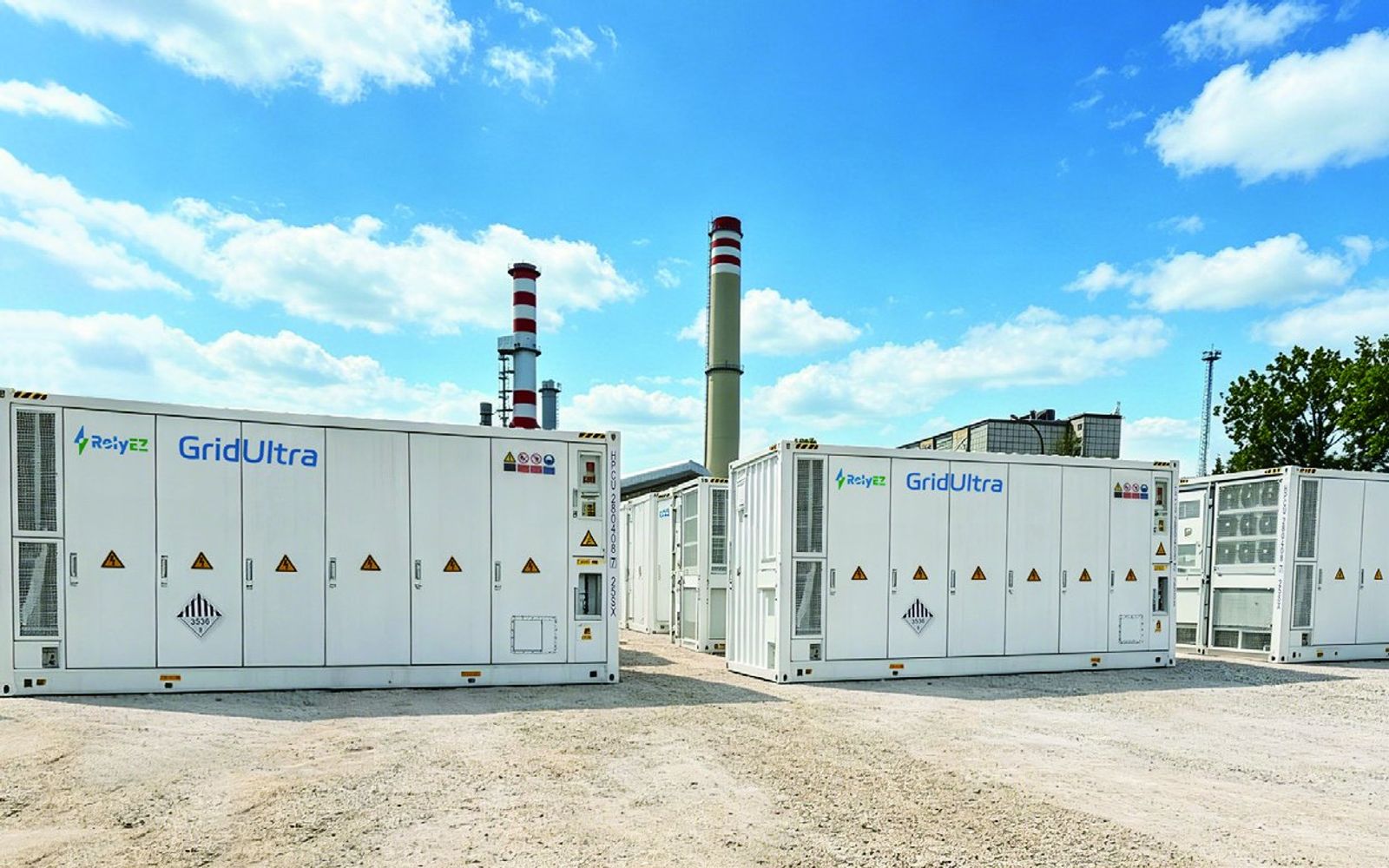
Both reserves are open to all capacity certified in mainland France, whatever the technology: generation, storage or consumption. Grid projects already qualified elsewhere in Europe give an idea of the standard required: in Hungary, the GridUltra plants at Becske, Bácsalmás and Tiszakécske (55 MW / 110 MWh, commissioned 2026) have obtained European aFRR certification, as detailed on our RelyEZ page.
Why go through an aggregator?
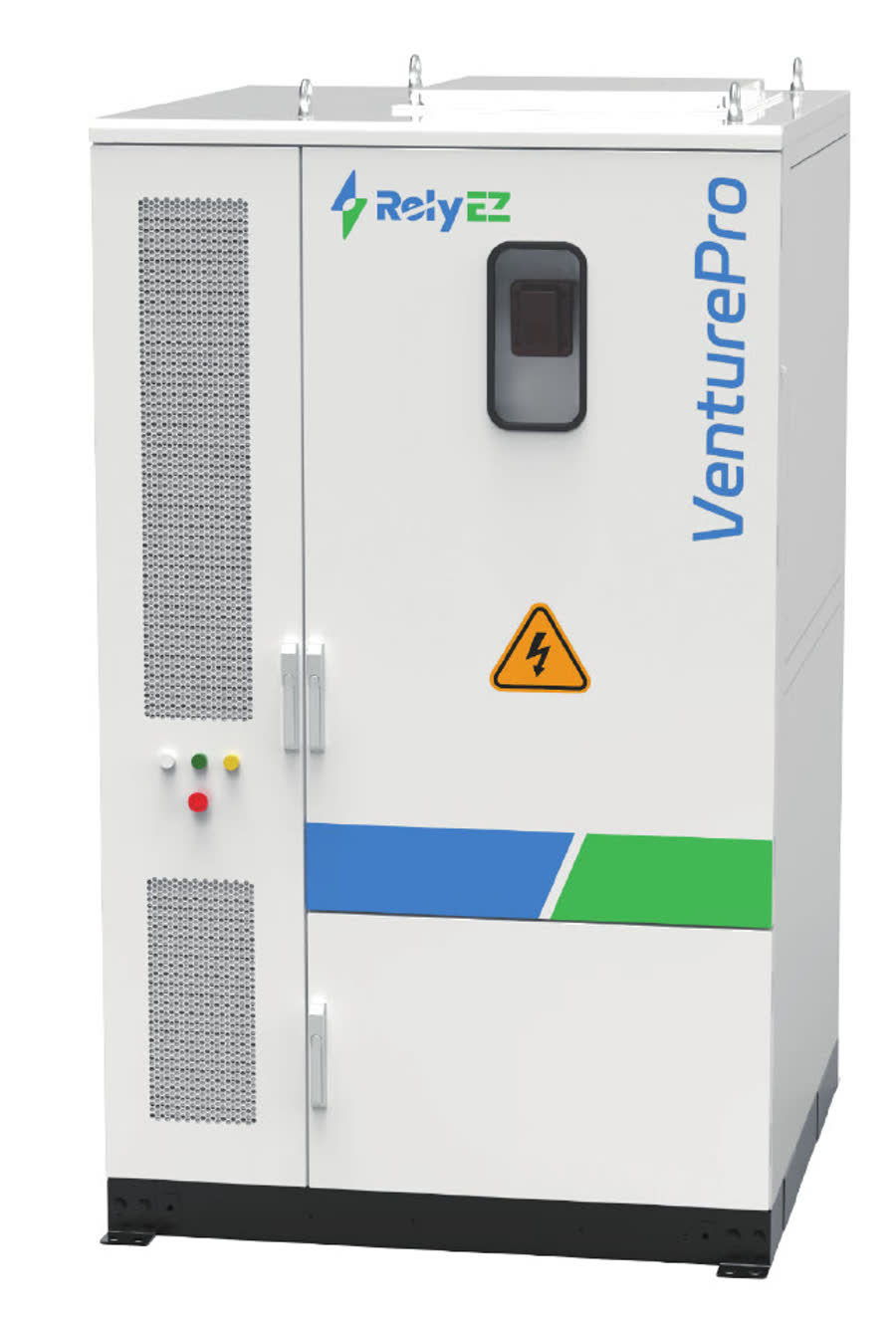
Because the thresholds are designed for portfolios. A VenturePro 250 cabinet delivers 125 kW: even with several on one site, it often stays below the megawatt required by the reserves and by capacity mechanism certification. The aggregator brings together dozens of sites, carries the commitments towards RTE, monitors performance and pays each site what its contribution earned.
It never has the whole battery at its disposal. The site sets its own needs first: the subscribed power not to exceed (see our article on peak shaving), the solar surplus to absorb, the minimum charge to keep as backup. Only what is left is offered to the markets.
How should a battery be sized for these revenues?
The markets do not reward the same thing. Sound sizing therefore starts from the site's use, then checks what each revenue source requires:
| What matters in the battery | |
|---|---|
| FCR | Power, with at least 15 minutes of energy available in each direction |
| aFRR | Power and a state-of-charge margin to follow the signal up and down |
| Capacity mechanism | Energy: the longer the battery lasts, the better its storage coefficient |
| Wholesale market | Energy and cycle count, to shift kilowatt-hours from low-price to high-price hours |
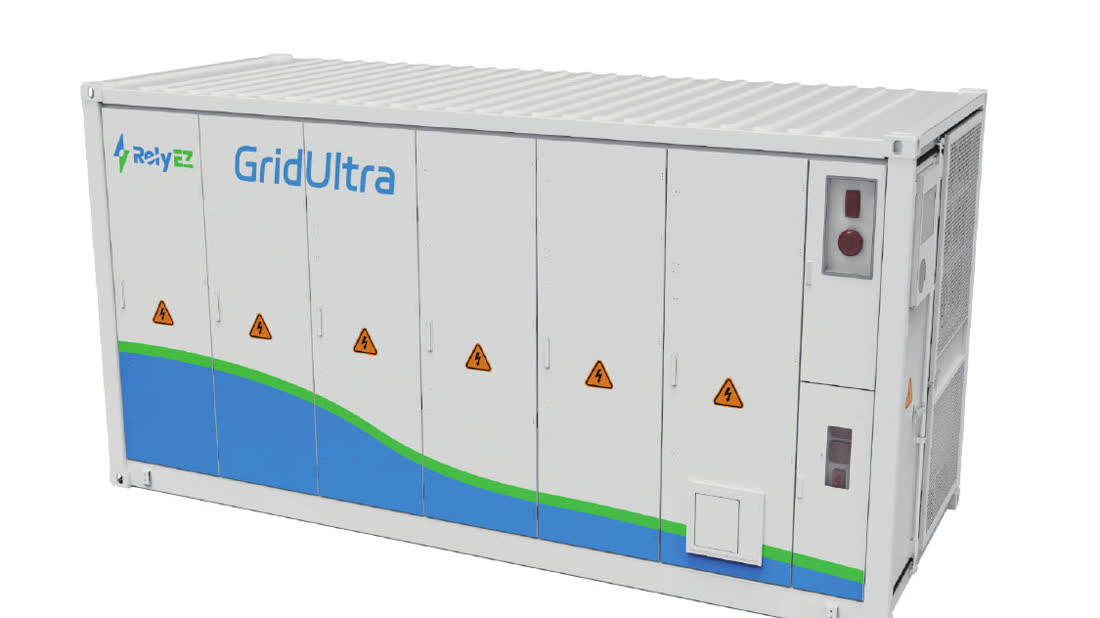
The ratio between power and energy must therefore be chosen with care. The GridUltra range illustrates this: the 4.18 MWh container is designed for a 4-hour discharge (0.25P), the 5.016 MWh one for a 2-hour discharge (0.5P). The first is better suited to energy uses, the second to power uses.
The wholesale market, for its part, pays for the gap between hours: RTE counted 513 hours of negative spot prices in 2025, against 352 in 2024. We explain this in our article on negative prices, and the make-up of a complete system in our article on BESS.
Three questions to ask before signing:
- What share of the battery stays reserved for the site, and at what hours?
- Which revenue sources does the aggregator commit to, and how is priority settled between them?
- On what price assumptions is revenue estimated, and as of what date? Reserve prices change with the number of batteries bidding into them: an estimate is only worth something with its date and method.
What JR Batteries does
JR Batteries, official RelyEZ distributor, sizes the battery from the site's needs, using the manufacturer's datasheets, then works with the aggregator so that the share left to the markets matches the requirements of each revenue source. To frame a project, the simplest starting point is your consumption and generation curves.
Frequently asked questions
Can a battery take part in the capacity mechanism?
Yes. The mechanism pays operators of generation, storage and demand-response capacity for being available during stress periods. The battery is certified on the power it can sustain and a coefficient that reflects its stored energy. Since the reform, RTE buys this capacity itself, through auctions.
What changes in the capacity mechanism on 1 November 2026?
The mechanism becomes centralised: RTE contracts the need itself, instead of obligations placed on suppliers. The European Commission approved it on 22 December 2025 for ten years, from 1 November 2026 to 31 March 2036. At most two auctions are held per delivery period, and the draft rules provide for a clearing price reserved for low-carbon flexibility, which includes batteries.
What is the difference between FCR and aFRR?
FCR, the primary reserve, responds on its own to frequency deviations: half the power within 15 seconds, all of it within 30 seconds. aFRR, the secondary reserve, follows a signal sent by RTE to bring the frequency back to 50 Hz, with a full activation time of 300 seconds. Both are procured the day before by tender, in blocks of at least 1 MW.
Do you need an aggregator to earn revenue from a commercial battery?
In most cases, yes. Reserve bids start at 1 MW, and capacity below 1 MW must be pooled to be certified for the capacity mechanism. An aggregator combines several sites into one portfolio, carries the commitments towards RTE and pays each site its share, under the contract.
How much does a battery earn on these markets?
It depends on the site, on the share of the battery left to the markets, on prices at the time and on the aggregation contract: no figure holds from one project to the next. Reserve prices change with the number of batteries bidding into them. The sound approach is to size for the site first, then assess market revenue with the aggregator, on dated assumptions.
Sources
The figures in this article come from these documents.
- Délibération n° 2026-24 du 27 janvier 2026 portant avis sur le projet d'arrêté précisant les règles du mécanisme de capacité — Commission de régulation de l'énergie (CRE), 27 January 2026
- Règles de marché, chapitre 4 : Services Système fréquence (annexe à la délibération n° 2024-44 portant approbation des règles) — RTE, approuvées par la CRE, 29 February 2024
- Providing frequency ancillary services (consulté le 9 octobre 2026) — RTE, portail Services, 9 October 2026
- Panorama de l'électricité renouvelable au 31 décembre 2025 (communiqué de presse) — SER, RTE, Enedis et Agence ORE, 16 July 2026
- Bilan électrique 2025 — principaux résultats — RTE, 1 February 2026
- Fiche technique gamme GridUltra 4,18 MWh (0.25P) et 5,016 MWh (0.5P) — stockage conteneurisé à refroidissement liquide — RelyEZ, 27 August 2026
- Fiche technique VenturePro Series 250 kWh — All-in-one Liquid-Cooled Energy Storage — RelyEZ, 27 August 2026
The ranges mentioned
A project in mind?
The grid connection, the contract and the generation already in place are enough to know which range fits.