
Technology · Regulation · 30 October 2026
Battery storage safety: what IEC 62619, IEC 62933 and UL 9540A prove
The safety of a battery storage system is demonstrated at three levels: the cell and the battery (IEC 62619), the complete system over its whole life cycle (IEC 62933-5-2, UL 9540) and fire behaviour in the event of thermal runaway (UL 9540A). Each standard answers a different question. Here is what each one checks, and what to ask a supplier for.
By Élien Geneste
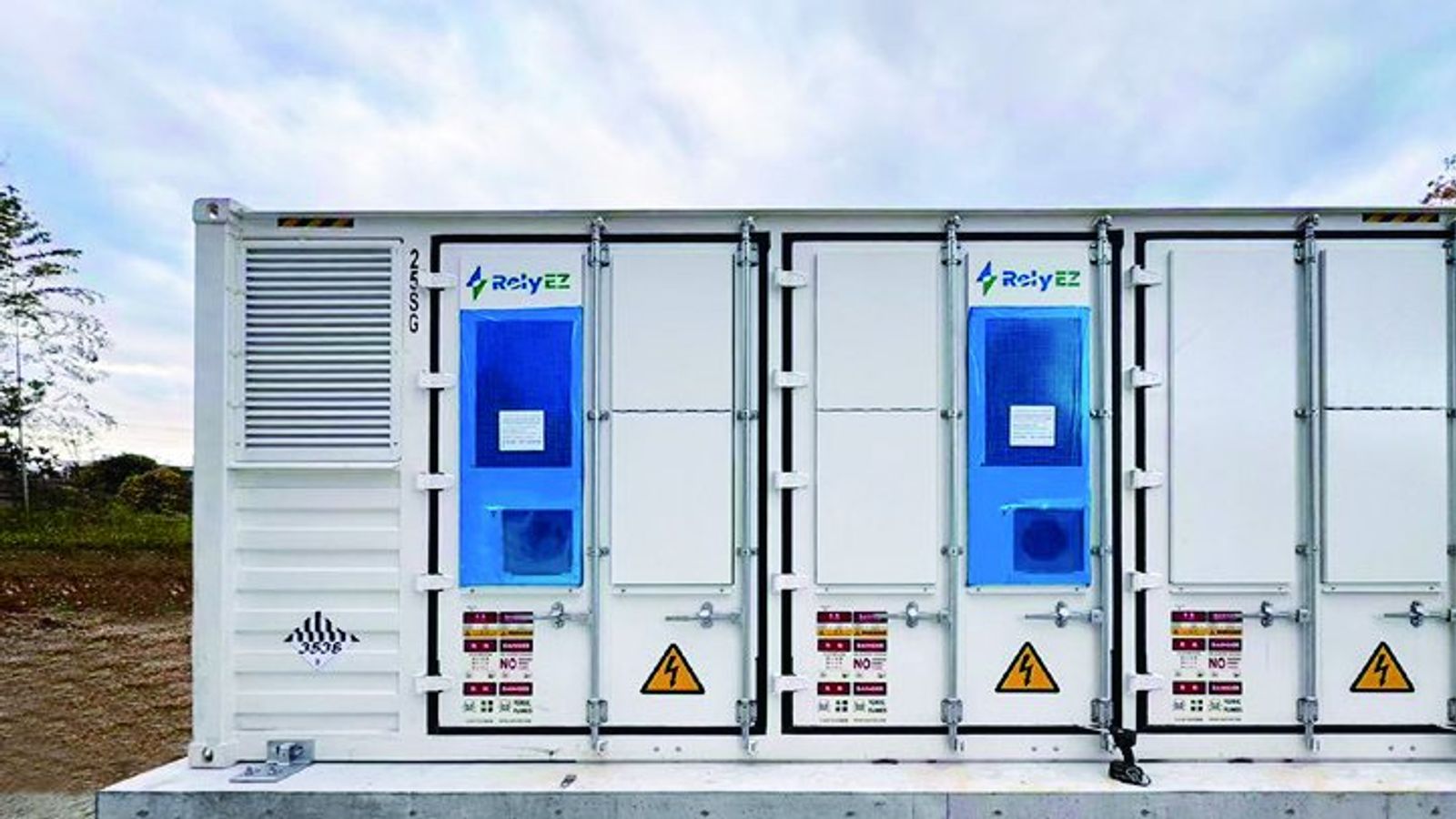
The safety of a battery storage system is not a logo on a datasheet. It is proven through a series of tests carried out at different scales: the cell, the battery, the complete system, then the fire behaviour of an entire cabinet or container. The IEC 62619, IEC 62933-5-2, UL 9540 and UL 9540A standards each answer one of these questions. Knowing which covers what lets you read a supplier's file in a few minutes, and see what is missing.
What does battery safety actually mean?
The risk specific to lithium-ion batteries is called thermal runaway: a damaged, overcharged or overheated cell heats itself up, releases flammable gases and can pass its heat on to its neighbours. All the safety of a storage system pursues three goals:
- prevent a cell from going into runaway (chemistry, manufacturing quality, monitoring by the BMS, cooling);
- contain a runaway if it happens (separation between cells and modules, detection, suppression);
- protect people and the surroundings (gas venting, distances, instructions for the emergency services).
Chemistry matters a great deal: LFP (lithium iron phosphate) is chosen for stationary storage largely for its thermal stability. We covered this in the article LFP or NMC battery. But chemistry is not enough: testing is what demonstrates it.
What does IEC 62619 check?
IEC 62619 sets the safety requirements and tests for lithium cells and batteries intended for industrial uses, including stationary ones: backup power supplies, telecoms, electricity storage systems. The edition in force dates from 2022.
It covers the cell and the battery (modules and the associated management system), not the installed storage system. It covers first-life cells: a second-life battery falls outside its scope. It also specifies that the electrical safety of the installation falls under the standards specific to the end use.
In practice, an IEC 62619 certificate says: "these cells and batteries have passed the safety tests intended for industrial use". It is the foundation, not the whole.
What do IEC 62933-5-2 and UL 9540 check?
These two standards change scale: they look at the complete system, with its batteries, converter, cooling, detection and suppression.
- IEC 62933-5-2 deals with the safety of grid-connected electrochemical storage systems. Its second edition, published on 9 December 2025, applies to the whole life cycle, from design to end of life. It focuses on the interactions between subsystems: a safe battery and a safe converter must also be safe together.
- UL 9540 is the North American safety standard for energy storage systems. UL Solutions presents it as the foundational product safety standard for these systems. It relies on other standards for components: UL 1973 for batteries, UL 1741 for converters.
| What it looks at | What it produces | |
|---|---|---|
| IEC 62619 | industrial lithium cells and batteries | certificate |
| UL 1973 | batteries for stationary use | certificate |
| IEC 62933-5-2 | grid-connected storage system, over its whole life cycle | certificate or conformity report |
| UL 9540 | complete storage system | certificate (listing) |
| UL 9540A | fire behaviour in the event of thermal runaway | test report, no verdict |
What is the UL 9540A test, and why does everyone ask for it?
UL 9540A is not a certification: it is a test method. Thermal runaway is deliberately triggered and what happens is measured. The report describes a real, quantified fire rather than an assumed one. That is why insurers, inspection bodies and fire services ask for it.
The method has four levels, as described by UL Solutions:
- Cell: how the cell goes into runaway, which gases it releases, and whether they are flammable.
- Module: does the runaway spread from one cell to another? What heat and gases does the module give off? Is there a risk of ignition or deflagration?
- Unit: does the fire spread from one module to another inside the cabinet or container? What heat and gas release rates? Risk of deflagration or re-ignition?
- Installation: is the fire protection effective, and what happens at the scale of the installed system?
The higher the level, the more the report speaks about the product as it will be installed on site.
What changes with the 6th edition and NFPA 855
The 6th edition of UL 9540A applies from 1 January 2027, according to UL Solutions. At installation level it introduces a more demanding large-scale fire test, which assesses the enclosure design and the separation distances between units. The unit-level test remains required for residential systems and for non-residential systems fitted with an active propagation prevention system.
This development follows the 2026 edition of the American installation standard NFPA 855, whose new Annex G.11 frames the large-scale test: establish a developed fire in one unit, and check that it does not spread to the neighbouring unit.
And in Europe, which rules apply?
Article 12 of Regulation (EU) 2023/1542 on batteries is devoted to the safety of stationary battery energy storage systems. Their technical documentation must prove that they have passed tests against the safety parameters listed in Annex V (external short circuit, overcharge, thermal propagation, gas emission, among others), assess hazards not covered by that list, and give instructions for reducing risks in the event of fire or explosion.
IEC standards serve as the basis for these tests. UL 9540A reports are commonly added to the file because they provide measurements that other documents do not. Each country then adds its own installation rules: in France, these are ICPE heading 2925 and the fire service's requirements, presented in our article ICPE and battery storage.
How do you read a supplier's safety file?
Four checks are enough to spot an incomplete file:
- The exact model. A certificate applies to a specific reference. A cell's certificate does not cover the cabinet; that of an earlier version does not cover the new one.
- The level of the UL 9540A test. A cell-level report says nothing about propagation inside the cabinet. Look for unit or installation level, and the date.
- Detection and suppression. Which sensors (smoke, temperature, gas), connected to what, and which extinguishing agent? The documentation must say so.
- The instructions to follow. Who is alerted, how the installation is made safe, what the emergency services need to know before intervening.
Example: what the file for a VenturePro cabinet shows
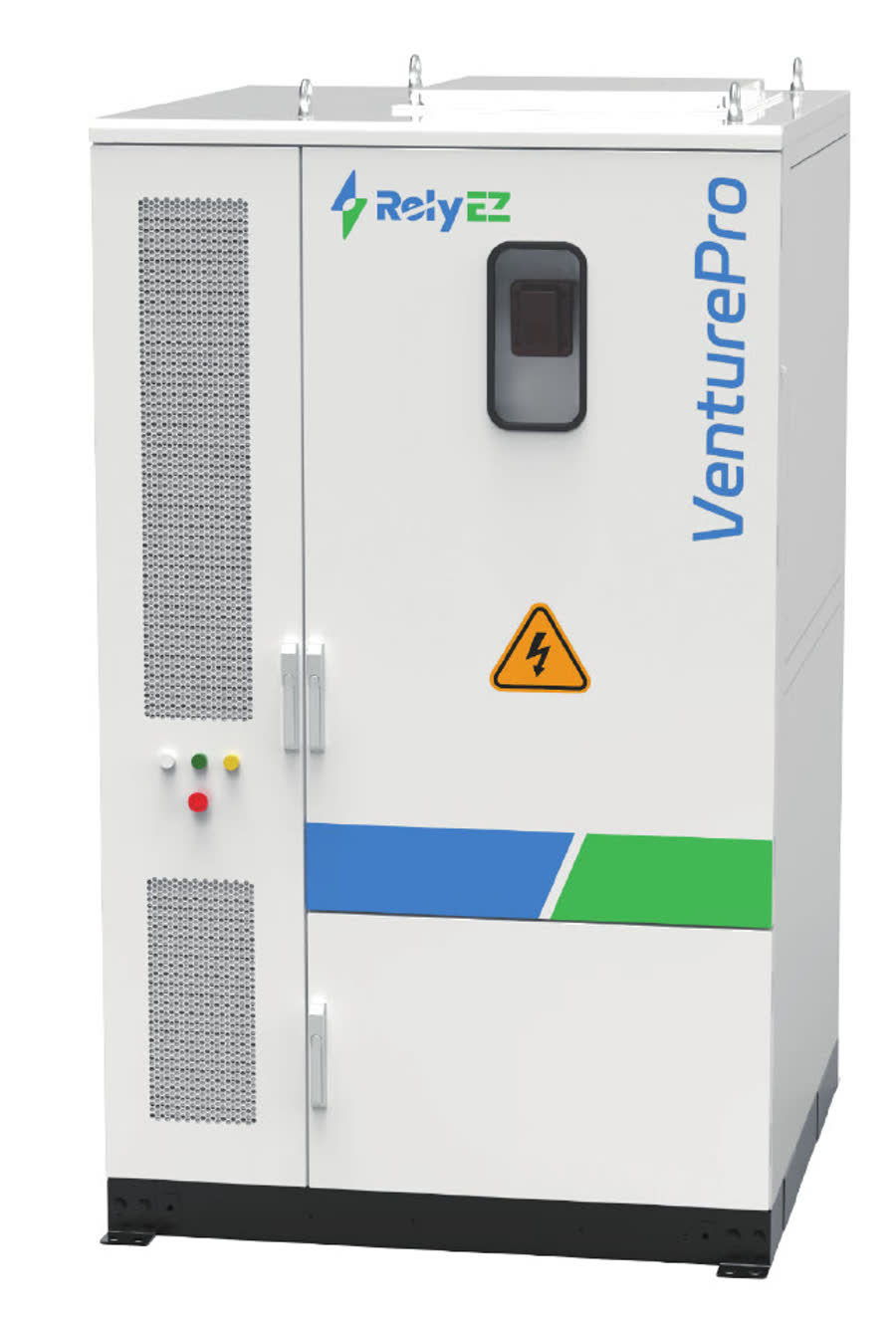
For RelyEZ VenturePro cabinets, the datasheet for the 250 kWh model lists, among others, IEC 62619, UL 1973, UL 9540 and UL 9540A, as well as UN 38.3 for the transport of lithium batteries. The cabinet uses 314 Ah LFP cells and liquid cooling; it is rated IP 54, its packs IP 67. Its manual describes a dual protection: smoke, temperature and combustible gas detectors linked to an audible and visual alarm, and aerosol extinguishing generators whose thermal head triggers at 93 °C.
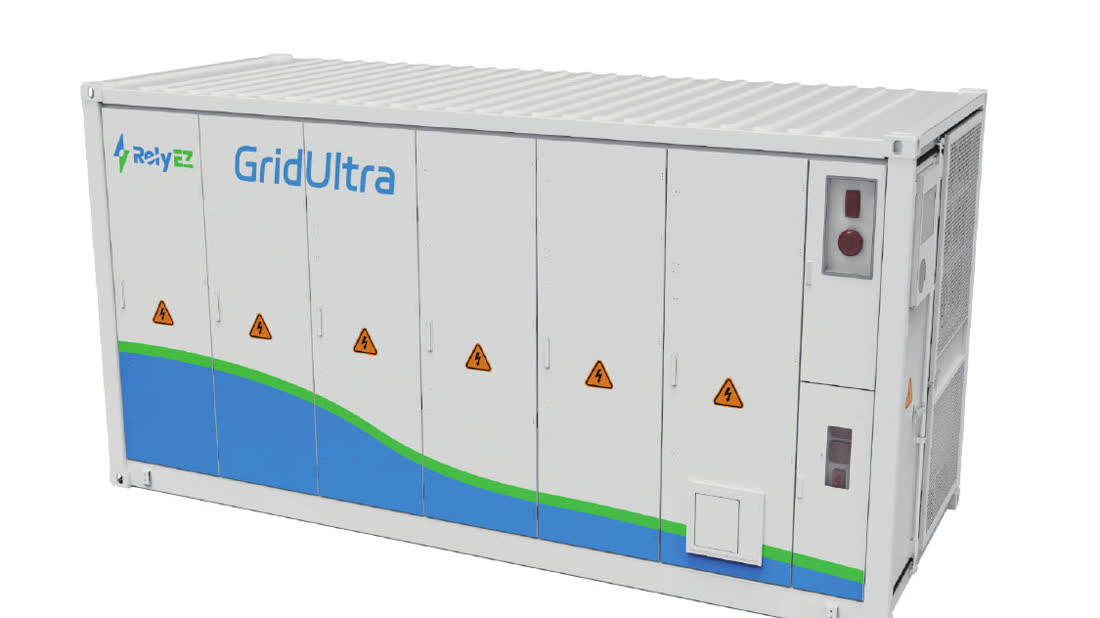
RelyEZ holds a unit-level UL 9540A report, dated 7 August 2026, on the UL version of this cabinet (reference YXYK-125K/552314-M). The GridUltra containers list the same families of standards, plus UN 3536 for the transport of batteries installed in a container. The public evidence on the manufacturer is gathered on our RelyEZ page, and the detail of the standards on the RelyEZ technology page.
Certificates and test reports are not published for free download: they are shared within a project, together with the site safety study.
Where should a project start?
Safety is dealt with from the study stage, not at delivery. The right order:
- choose a system whose certificates and UL 9540A report cover the exact model proposed;
- define the layout with these documents: distances, emergency access, gas venting;
- share the file with the insurer and the fire service before the applications are filed, not after.
For an overview of what makes up a system, see BESS: the battery storage system, piece by piece. To study a project, our team prepares the safety file alongside the sizing.
Frequently asked questions
Which standard guarantees the safety of a battery storage system?
None does on its own. IEC 62619 checks the safety of industrial lithium cells and batteries, IEC 62933-5-2 and UL 9540 that of the complete system, and UL 9540A measures what happens if a cell goes into thermal runaway. A sound file brings the three levels together.
Is UL 9540A a certification?
No. UL 9540A is a test method: it produces a report describing fire behaviour (gases released, heat given off, propagation), with no "certified" verdict. Design offices, insurers and fire services then use this report to set the site's distances and protections.
At what level should the UL 9540A test have been carried out?
The method has four levels: cell, module, unit, installation. The higher the level, the more the report says about the real system. Check which exact model was tested and at what level: for VenturePro cabinets, RelyEZ holds a unit-level report dated 7 August 2026.
Do these American standards count in Europe?
Yes, as a test reference. In Europe, Regulation (EU) 2023/1542 requires the technical documentation of a stationary system to prove tests against the safety parameters in its Annex V, and IEC standards serve as the basis. UL 9540A reports are commonly requested by insurers and fire services because they describe a measured fire.
Which documents should you ask a battery storage supplier for?
The IEC 62619 and UL 9540 (or IEC 62933-5-2) certificates in the name of the proposed model, the UL 9540A report with its level and date, the description of detection and suppression, and the instructions to follow in the event of an incident. These documents are shared within a project, together with the site safety study.
Sources
The figures in this article come from these documents.
- IEC 62619:2022 — Secondary cells and batteries containing alkaline or other non-acid electrolytes — Safety requirements for secondary lithium cells and batteries, for use in industrial applications — Commission électrotechnique internationale (IEC), 24 May 2022
- IEC 62933-5-2:2025 — Electrical energy storage (EES) systems — Part 5-2: Safety requirements for grid-integrated EES systems — Electrochemical-based systems (édition 2.0) — Commission électrotechnique internationale (IEC), 9 December 2025
- UL 9540A Test Method — niveaux d'essai cellule, module, unité, installation, et nouveautés de la 6e édition — UL Solutions, 28 October 2026
- Understanding UL 9540A and NFPA 855 (UL 9540A 6e édition applicable au 1er janvier 2027, annexe G.11 de NFPA 855 édition 2026) — UL Solutions, The Code Authority, 1 April 2026
- Règlement (UE) 2023/1542 du 12 juillet 2023 relatif aux batteries et aux déchets de batteries, article 12 (sécurité des systèmes stationnaires de stockage d'énergie par batterie) et annexe V — Union européenne, EUR-Lex, 12 July 2023
- Fiche technique VenturePro Series 250 kWh — All-in-one Liquid-Cooled Energy Storage ; manuel produit PS-2024-06-001 (version A0 du 11/07/2024) ; rapport UL 9540A niveau unité CQES260100008201 du 07/08/2026 (modèle YXYK-125K/552314-M) — RelyEZ, 27 August 2026
The ranges mentioned
A project in mind?
The grid connection, the contract and the generation already in place are enough to know which range fits.