
Regulation · Sizing · 27 October 2026
Collective self-consumption and storage: where a battery fits in the operation
The French Energy Code provides for storage in collective self-consumption: a battery counts as a consumer of the operation while it charges, and as a producer when it discharges. It keeps within the operation the solar output that no one consumes at the time, so it can be shared in the evening or the next day. It is sized on that surplus, read from the participants' load curves at 15-minute intervals.
By Élien Geneste
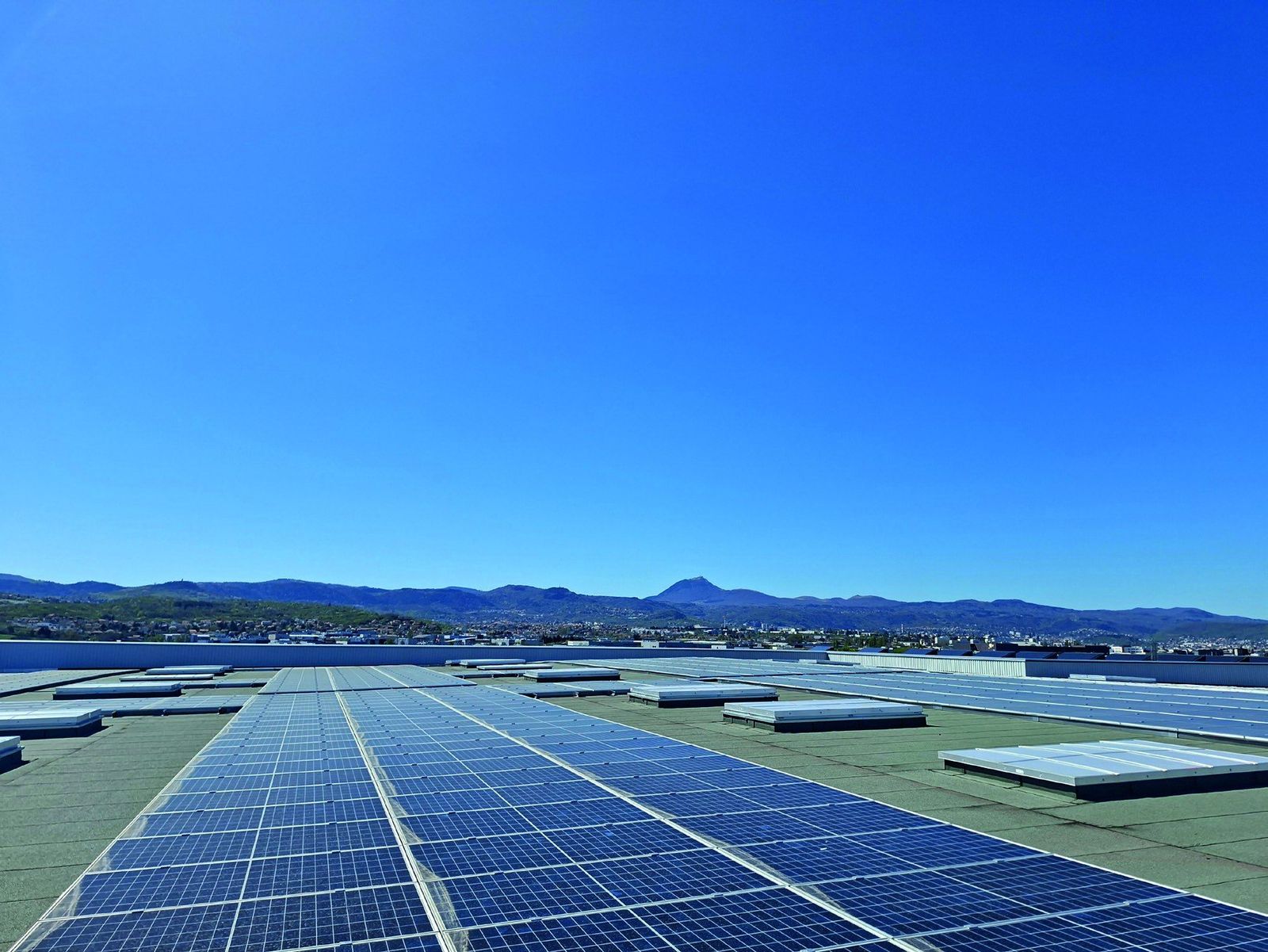
Collective self-consumption shares the output of one or more local plants between neighbouring consumers. Storage has its place in it: the French Energy Code treats a battery as a participant that consumes while it charges and produces while it discharges. This article explains what the texts say, where to place the battery in the operation and how to size it.
What is a collective self-consumption operation?
A collective self-consumption operation brings electricity producers and consumers together within an organising legal entity (PMO): an association, a cooperative, a company, a local authority. The output is not physically delivered to each participant: it is allocated by calculation. At each time interval, Enedis measures what the producers export and what the consumers draw, then allocates the output according to the allocation key sent by the PMO.
Each consumer keeps their supplier for the top-up: what the operation does not cover. Each producer keeps a buyer for the surplus: what no participant consumes at the same moment. Since October 2024, this calculation has been made at 15-minute intervals, the interval used for imbalance settlement (Enedis guide, July 2025 version).
The scheme is growing fast. According to Enedis open data, France had 2,620 active operations at the end of September 2026, against 1,343 a year earlier. Auvergne-Rhône-Alpes has the most: 429.
What distance and power limits apply?
An operation can take place within a single building, with no power limit, or extend over several sites: it is then called an extended operation. Its perimeter is set by the order of 21 November 2019, amended in 2023 and then by the order of 21 February 2025, which raised the power ceiling.
| Distance between the participants furthest apart | Cumulative production capacity | |
|---|---|---|
| Extended operation, by default | 2 km | below 5 MW |
| Presence of a fire and rescue service | 20 km | below 5 MW |
| Peri-urban and rural municipalities, by derogation | 10 km | below 5 MW |
| Rural municipalities, by derogation | 20 km | below 5 MW |
| Participating municipality or EPCI, by derogation | territory of the EPCI | below 10 MW |
Derogations are requested from the ministry in charge of energy, by the PMO (photovoltaique.info, page updated on 16 March 2026). The derogation at the scale of the inter-municipal authority requires all participants to be public bodies or bodies entrusted with a public service mission.
What does the Energy Code say about storage?
Article D. 315-5 of the French Energy Code settles the matter. When the operation includes a unit storing the electricity it produces, the quantities stored are counted as those of a final consumer of the operation, and the quantities released as those of a producer (SéQuélec guide GP 18, published with Enedis). Two rules frame the calculation at each metering interval:
- the energy stored, added to the output allocated to consumers, does not exceed the operation's total production;
- the output allocated to consumers does not exceed total production plus the energy released from storage.
In other words, the battery creates nothing: it shifts in time the operation's output. Enedis's teaching guide in fact lists storage among the installations that can take part, alongside solar, wind and hydro.
Why add a battery to an operation?
Sharing only covers what is produced and consumed in the same quarter hour. A solar plant produces mostly between late morning and mid-afternoon; participants also consume early in the morning, in the evening and, for some, at night. The difference goes as surplus, sold to the producer's buyer.
The battery keeps that surplus within the operation:
- in the evening and at night, it returns solar energy to homes, public buildings or sites that run around the clock;
- at weekends, when offices and workshops close, it carries part of the output over to Monday morning;
- during negative-price hours, it charges instead of exporting, in line with the approach described in our article on negative prices and solar;
- at a participant with a heavy network access contract, the same battery can also shave its peaks, as explained in the article on exceeding subscribed power.
What it brings depends on the participants' profile: an operation that mixes offices, homes and an evening activity does not have the same surplus as a business park that closes at 6 pm.
Where should the battery go in the operation?
Two set-ups are found.
Behind a participant's meter
The battery is installed at a consumer who also produces, for example a building with a rooftop plant. It first serves that building's individual self-consumption: it stores what the building does not consume and returns it to it. Only the surplus this site exports to the grid then enters the sharing. The set-up is simple, but the stored energy mainly benefits that participant.
With its own connection point
The battery is a full participant in the operation, declared to Enedis with its characteristics. It charges on the surplus of all the producers and returns the energy to all the consumers, according to the allocation key. This is the set-up that follows Article D. 315-5 most closely; it requires an up-to-date agreement with Enedis and a key designed for the discharge hours.
In both cases, the battery is declared like the other production and storage installations, and its connection follows the grid operator's usual rules.
How should the battery be sized?
Correct sizing is what gives the battery its value. The method starts from the data the operation already produces.
- Gather the load curves of each participant and each producer, at 15-minute intervals, over at least twelve months. Enedis sends them to the PMO with the participants' consent.
- Calculate the unshared surplus at each interval: total production minus the participants' total consumption, when it is positive.
- Set the power on the peaks of this surplus. A battery weaker than these peaks lets part of the output go; a much stronger battery sits unused.
- Set the energy on the volume of surplus in a typical day that you want to return, compared with evening and night consumption: there is no point storing more than the participants consume before sunrise.
- Check the seasons. A battery sized on July stays half empty in December. Several sizes are compared over the whole year.
- Adapt the allocation key to the discharge hours (see below).
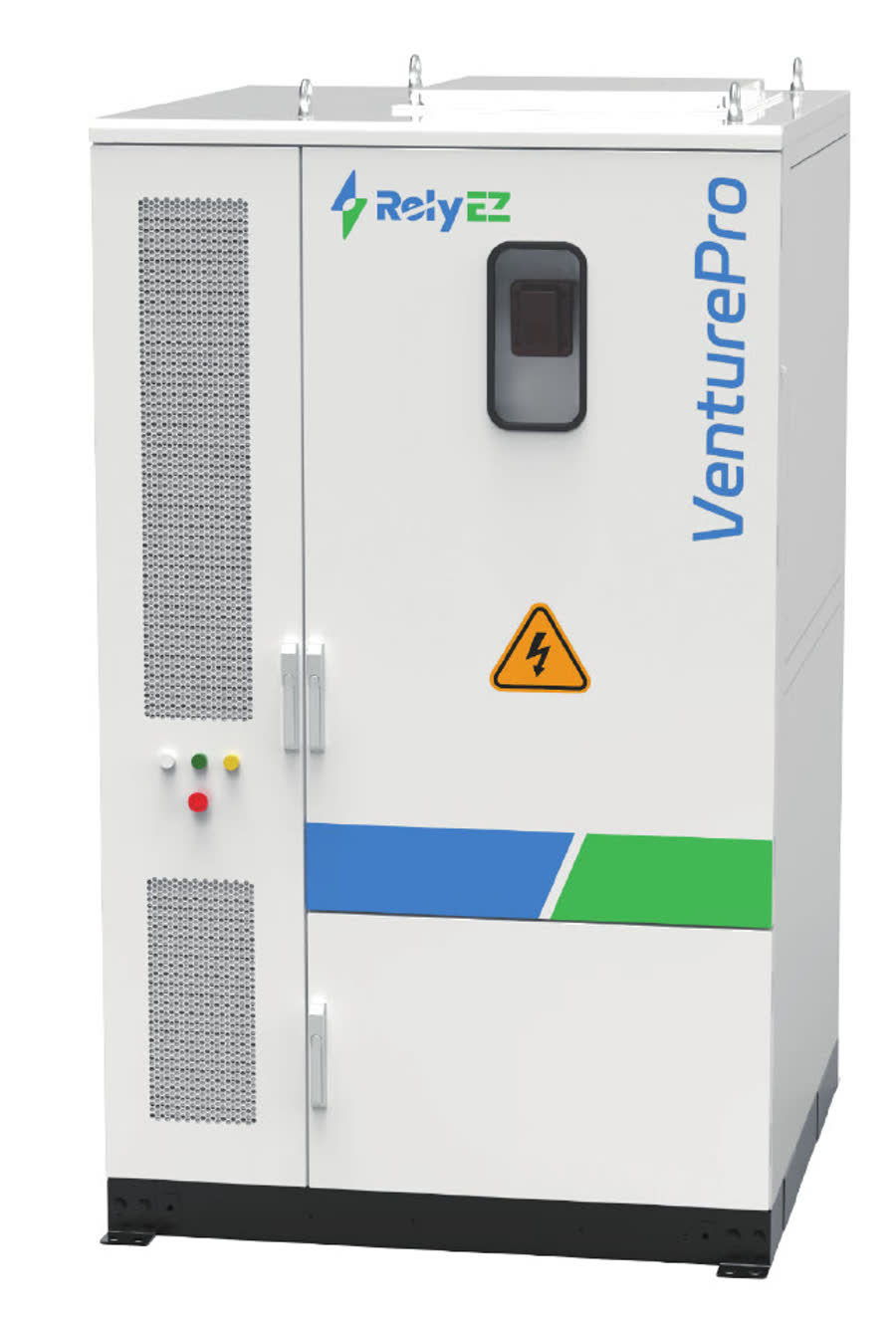
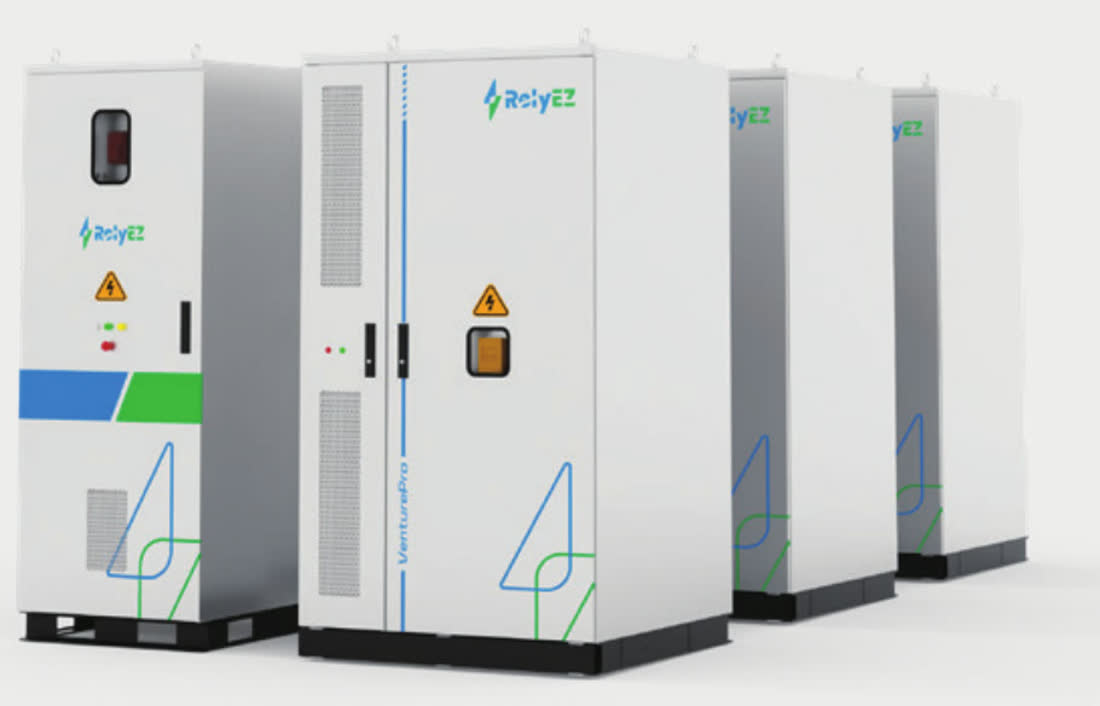
For medium-sized operations, a VenturePro cabinet delivers 125 kW and stores 250 kWh; the VenturePro Fusion system combines one to eight battery cabinets around a control cabinet, from 261 kWh to 3.34 MWh, which makes it possible to adjust the energy without changing the architecture (RelyEZ datasheets).
Which allocation key with a battery?
The PMO chooses between three types of key, and can change during the operation (Enedis guide):
| Principle | With a battery | |
|---|---|---|
| Constant | a fixed percentage per consumer | simple, but does not follow the discharge hours |
| Dynamic | different coefficients at each metering interval, calculated by the PMO | the finest: it directs the energy returned towards those who consume in the evening |
| Pro rata | calculated by Enedis according to each participant's consumption at each interval | no calculation for the PMO, it follows actual consumption |
The underlying rule does not change: at each interval, output is allocated to a consumer only if there is, at the same moment, production or release from storage and consumption.
Where to start?
An existing operation already has the essentials: the PMO, the agreement and the load curves. The study then covers the past year's surplus and the simplest set-up for the battery. For an operation in the planning stage, the battery is considered from the outset, together with the perimeter and the key.
A lithium-ion battery with more than 600 kW of cumulative charging power on a site also falls under ICPE heading 2925: our article on ICPE and storage batteries details the thresholds. JR Batteries works with JR Énergie, the group's solar installer, to study an operation's battery from its own data.
Frequently asked questions
Can a battery be part of a collective self-consumption operation?
Yes. Article D. 315-5 of the French Energy Code provides that an operation may include a unit storing the electricity it produces. The quantities stored are treated as those of a final consumer of the operation, the quantities released as those of a producer. The battery is declared to Enedis like the other installations.
Where should the battery go: at a participant's site or on its own?
Both are done. Behind a participant's meter, it first serves that participant's individual self-consumption, and only the surplus it exports enters the sharing. With its own connection point, it is a full participant: it charges on the operation's surplus and returns the energy to everyone, according to the allocation key. The choice depends on who funds the investment and who consumes in the evening.
What size of battery for collective self-consumption?
The power is set on the surplus peaks, when production exceeds the consumption of all participants; the energy, on the volume of surplus in a typical day that you want to return in the evening or at night. The calculation uses each participant's load curve at 15-minute intervals, over a year, so as not to size on summer days alone.
What distance and power limits apply to an extended operation?
By default, the two participants furthest apart are at most 2 km from each other and cumulative production capacity stays below 5 MW, since the order of 21 February 2025. Derogations extend the distance to 10 km in peri-urban or rural areas and to 20 km in rural areas, and open up the scale of the inter-municipal authority, up to 10 MW, when a municipality or an EPCI takes part. An operation within a single building has no power limit.
Does the allocation key need to change when a battery is added?
It at least needs reviewing. A fixed key, constant at every metering interval, does not take account of the hours when the battery discharges. A dynamic key, sent by the organising legal entity, or allocation pro rata to consumption calculated by Enedis, distributes the energy returned in the evening more finely.
Sources
The figures in this article come from these documents.
- Autoconsommation collective — maille région (nombre d'opérations actives par trimestre) — Enedis (open data), 13 October 2026
- Autoconsommation collective — Guide pédagogique — Enedis, 22 July 2025
- Conditions et mise en œuvre d'une opération d'autoconsommation (guide GP 18) — SéQuélec (Enedis, FFIE, SERCE, FEDELEC, CAPEB, FNCCR, Consuel), 1 November 2021
- Définition et périmètre de l'autoconsommation collective — photovoltaique.info, 16 March 2026
- Autoconsommation collective : extension du périmètre et rehausse des seuils de puissance (arrêté du 21 février 2025) — photovoltaique.info, 22 April 2025
- Fiche technique VenturePro Series 250 kWh — RelyEZ, 27 August 2026
- Fiche technique VenturePro Fusion — Liquid-Cooled Modular Battery Cabinet System — RelyEZ, 27 August 2026
The ranges mentioned
A project in mind?
The grid connection, the contract and the generation already in place are enough to know which range fits.