
Regulation · Revenue and markets · Sizing · 28 October 2026
Solar feed-in tariffs in France: what to do with kWh during negative-price hours
Under a French feed-in contract (obligation d'achat), a solar producer is paid the contract tariff even when the market price falls below zero: the obligated buyer resells the power and the State covers the difference. But the rules are tightening. Since the order of 1 June 2026, surplus output from new small installations is bought at 1.1 c€/kWh, and large plants can be ordered to stop. A battery, charged only by the panels, then keeps the midday kilowatt-hours for the site.
By Élien Geneste
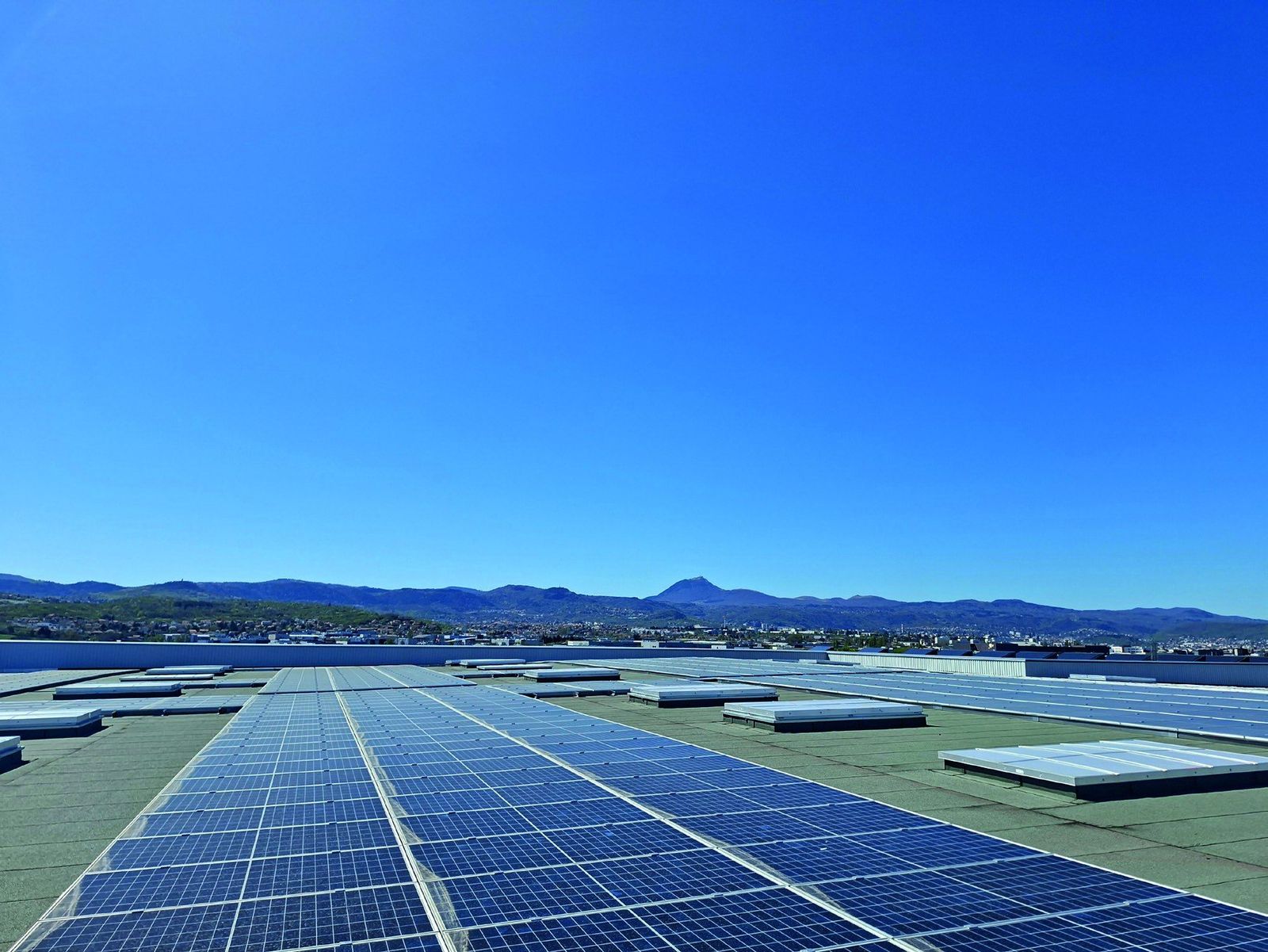
The French solar feed-in tariff scheme (obligation d'achat) has long kept producers insulated from market prices: they sell their output at a tariff fixed for twenty years and never see the hours when the wholesale price falls below zero. Yet those hours are becoming more frequent — RTE counted 513 of them in 2025 — and the authorities are adapting the contracts accordingly. This article sets out what the texts in force at the end of October 2026 provide, depending on the size of the installation, and where battery storage fits within that framework.
What happens to a feed-in contract when the price is negative?
Under a feed-in contract, the producer sells all of its exported electricity, or its surplus, to an obligated buyer (EDF OA in most cases), at the tariff set by the order in force when the contract was requested. The obligated buyer then resells that electricity on the market.
When the market price is negative, the buyer therefore sells at a loss. The CRE describes this in its opinion of 29 April 2026: the State covers the difference between the negative price and the purchase tariff, through the public energy service charges. For the producer, the contract tariff is still paid: negative hours do not show on its sales invoice.
It is precisely this cost to the public purse that recent texts seek to reduce, in two ways: by lowering the tariff for new small-scale contracts, and by allowing large plants to be stopped during negative hours.
What did the order of 1 June 2026 change for small installations?
The tariff order of 6 October 2021, known as "S21", sets the purchase conditions for electricity from solar installations on buildings, sheds or car-park canopies. It has been amended many times; the latest amendment, the order of 1 June 2026, was published in the Journal officiel on 4 June 2026.
| Before the order of 1 June 2026 | Since the order of 1 June 2026 | |
|---|---|---|
| Installations eligible for the open window | 100 kWp at most since 22 September 2025 | 100 kWp at most |
| 9 kWp or less | Surplus sale only (order of 26 March 2025) | Surplus sale only |
| Investment premium | 8 c€/Wp for 9 kWp or less (CRE opinion of 29/04/2026) | Abolished |
| Surplus purchase tariff | 40 €/MWh for 9 kWp or less, 47.3 €/MWh in Q2 2026 for 9 to 100 kWp (CRE opinion) | 1.1 c€/kWh excluding VAT, indexed by 2 % a year |
The published text does not make payment of the tariff depend on the market price. The draft submitted to the CRE provided for paying the surplus only in hours of positive or zero prices; the CRE recommended a fixed tariff across all hours, on the grounds that output from small installations is still only very rarely metered as a load curve. It nevertheless wants that move to load-curve metering as soon as possible, so that small producers also receive the price signal.
The logic of the new tariff is clear: at 1.1 c€/kWh, exported surplus no longer pays for the installation. The CRE says so in its opinion: this level no longer allows an installation with a very low self-consumption rate to be profitable. The value of a recent installation now lies in the share of its output that the site consumes itself.
And for large plants under feed-in contracts?
For high-capacity plants, the rule is different. Article 175 of the 2025 Finance Act allows the counterparties of feed-in contracts to ask producers to stop or limit their output when this reduces public service charges. A producer that follows the order is compensated for the output not generated.
- The order of 22 December 2025 covers solar plants above 12 MWp, as well as wind farms above 10 MW.
- A draft amending order, on which the CRE issued its opinion on 12 March 2026, lowers that threshold to 10 MWp for solar.
- Article 185 of the 2026 Finance Act widens the scope of the law: the capacity of the installations concerned can go down to 1 MWp.
A plant stopped during a negative-price episode is compensated, but it does not produce. The 1 MWp threshold opened by the law extends the possible reach of the mechanism to mid-sized plants; an order will set the applicable threshold, if any.
Where does a battery fit in an installation under a feed-in contract?
The S21 order explicitly provides for storage. Its Article 6 requires, for installations equipped with a storage device, a technical device guaranteeing that the stored energy comes exclusively from the generating installation. The battery is charged by the panels, never from the grid. Article 7 allows the presence or absence of storage to be declared both before and after commissioning, through a contract amendment request.
In practice, a battery installed on a self-consuming site that sells its surplus plays three roles:
- Keeping the midday surplus for the site. Kilowatt-hours produced while the site consumes little are stored instead of exported, then used at the end of the day or the next morning.
- Reducing what goes onto the grid when it is worth least. The midday surplus coincides with the hours when negative prices are concentrated; RTE places them mainly in spring and summer, when solar output is abundant.
- Shaving the site's peaks, when demand exceeds the subscribed capacity: we cover this in our article on exceeding subscribed capacity.
The framework is different for an installation selling all of its output under an older contract: the battery does not change the tariff received, and its value depends on the contract terms and the grid connection. It is a case-by-case study, before any investment.
How do you size storage for an installation under a feed-in contract?
Good sizing starts from the site's data, not from the power of the panels.
- The production curve of the installation, at 15-minute or hourly resolution, over a full year if available.
- The consumption curve of the site, over the same period: it shows what share of the surplus can be used later.
- The shiftable surplus: the excess energy produced at midday that the site actually uses in the evening or morning. This sets the battery's usable energy.
- The charge and discharge power, set by the production peaks to absorb and the consumption peaks to cover.
- The contract and the connection: type of sale (surplus or full export), applicable order, connection capacity, and the Article 6 condition on the origin of the stored energy.
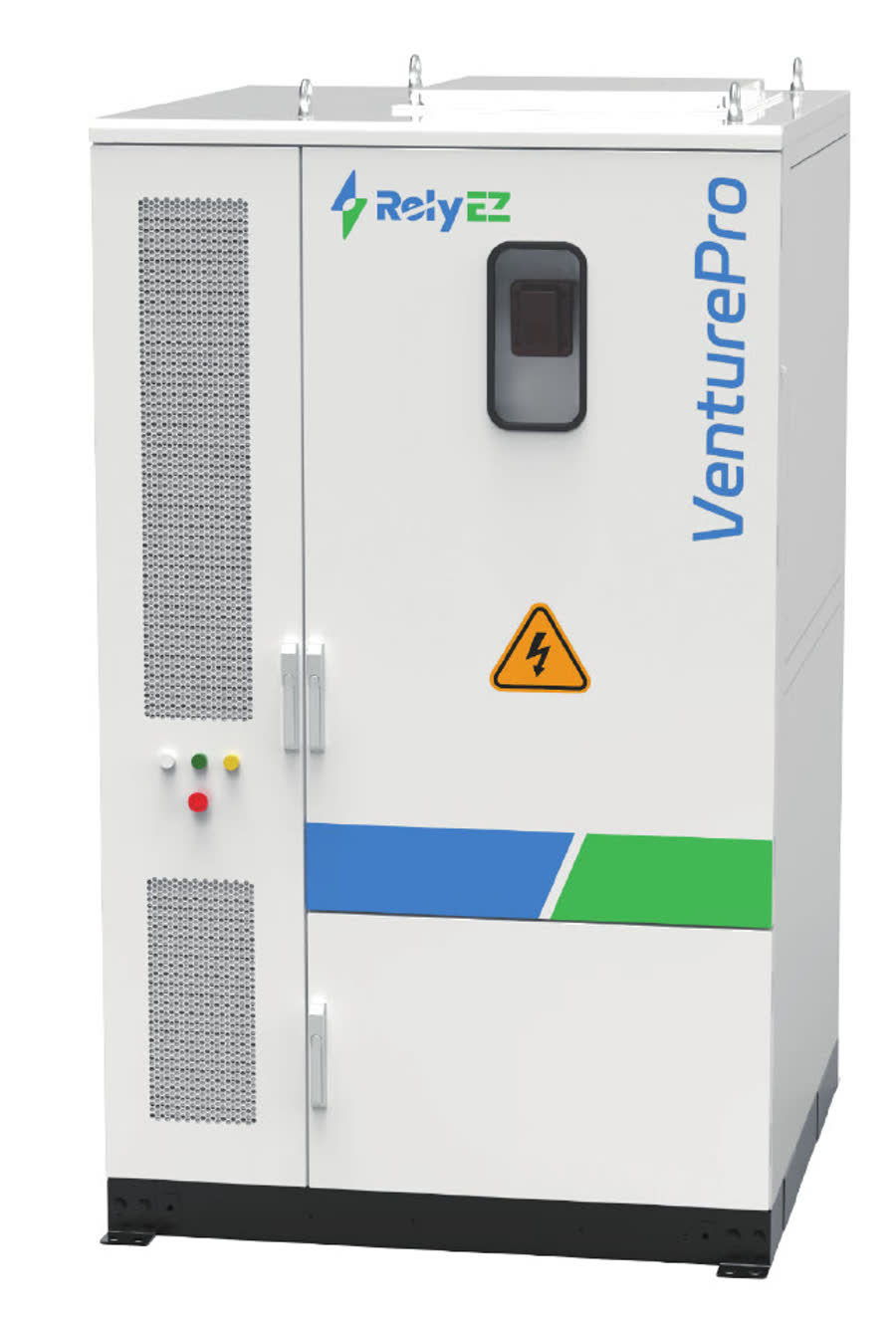
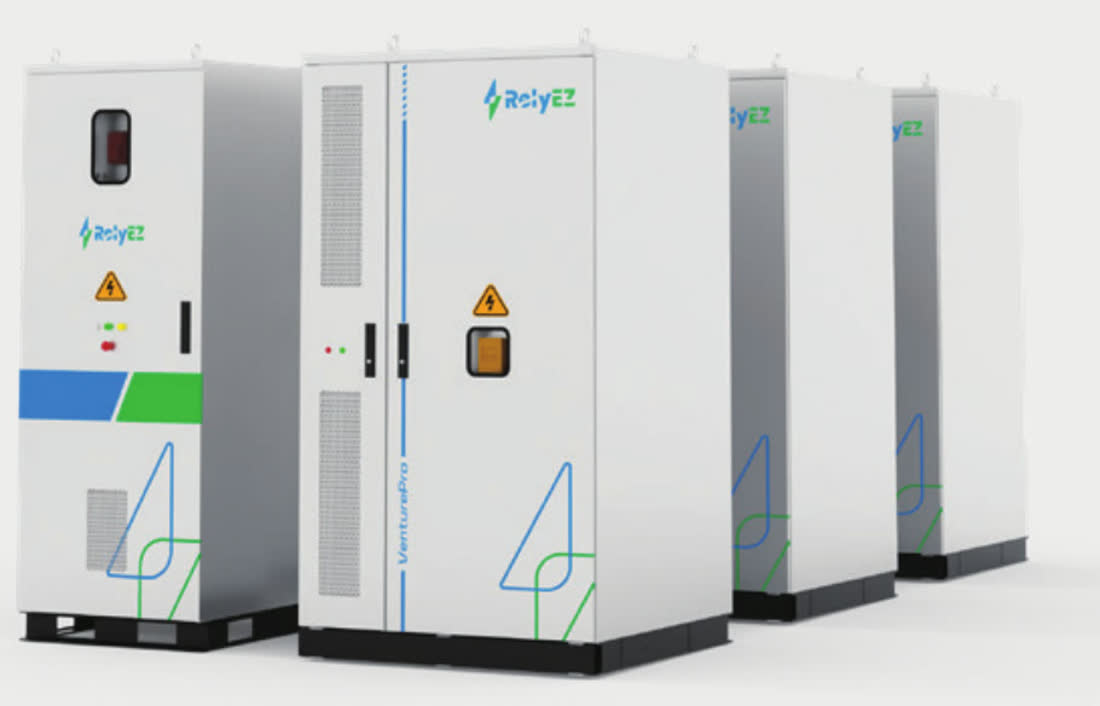
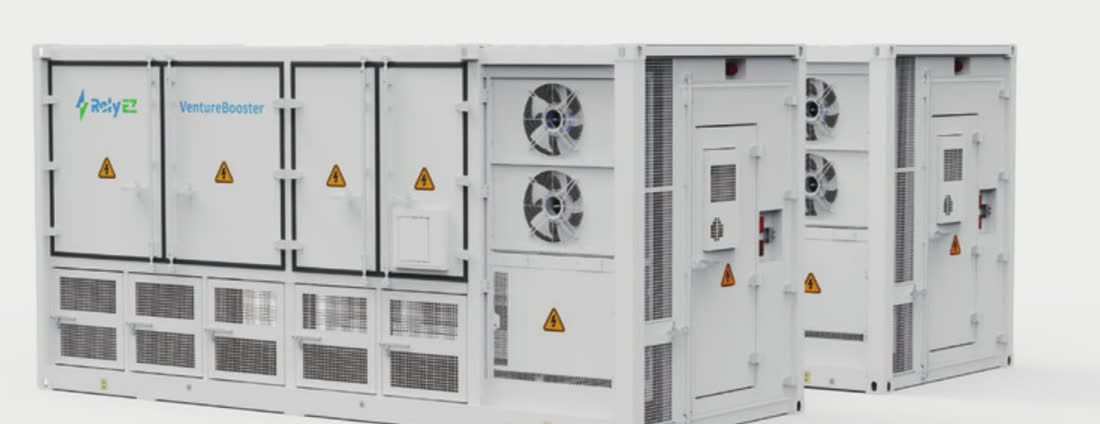
For a commercial, industrial or agricultural site, the VenturePro 250 cabinets (250 kWh, 125 kW) and the modular Fusion 2 range (from 261 kWh to 3.34 MWh with a single control cabinet) cover most cases. For a higher-capacity plant, the DC800 range connects to the 800 V bus, at the output of the inverters.
The same reasoning applies to shared schemes: our article on collective self-consumption and storage explains the place of a battery in an operation with several participants. And for plants selling at market price, our article on negative prices and solar PV details how output is shifted to peak hours.
Where do you start?
The starting point is an assessment: production and consumption curves, purchase contract, grid connection and available space. We then compare several battery sizes on the site's real data, and propose a configuration and a connection diagram that complies with the applicable order. Installation, the grid connection application and maintenance are handled by our partner installer JR Énergie.
Frequently asked questions
Does a producer under a feed-in contract lose money during negative-price hours?
Not directly: the producer is paid the contract tariff, and the obligated buyer resells the electricity on the market. When that price is negative, the State covers the difference through the public energy service charges, as the CRE points out in its opinion of 29 April 2026. The rules do change, however, for new contracts and for large plants.
What is the surplus feed-in tariff since the order of 1 June 2026?
The order of 1 June 2026, published in the Journal officiel on 4 June 2026, sets the purchase tariff at 1.1 c€/kWh excluding VAT, indexed by 2 % a year, and abolishes the investment premium. For installations of 9 kWp or less, only sale of the exported surplus remains eligible. Installations above 100 kWp have gone through tenders since 22 September 2025.
Can a battery be added to an installation under an S21 contract?
Yes, on one condition set by Article 6 of the order: a technical device must guarantee that the stored energy comes exclusively from the generating installation. The battery is therefore charged by the panels, never from the grid. The order also provides for declaring whether storage is present, including after commissioning, through a contract amendment request.
Can large solar plants under feed-in contracts be stopped during negative prices?
Yes. Article 175 of the 2025 Finance Act allows the obligated buyer to request a stop or a limitation of output, with compensation for the producer. The order of 22 December 2025 covers solar plants above 12 MWp; a draft reviewed by the CRE on 12 March 2026 lowers that threshold to 10 MWp, and the 2026 Finance Act allows it to go down to 1 MWp.
How do you size a battery for an installation under a feed-in contract?
We start from the installation's production curve and the site's consumption curve, at 15-minute or hourly resolution. The battery is sized on the midday surplus the site can actually use later, not on the power of the panels. We compare several sizes before proposing a configuration.
Sources
The figures in this article come from these documents.
- Arrêté du 1er juin 2026 modifiant l'arrêté du 6 octobre 2021 fixant les conditions d'achat de l'électricité produite par les installations implantées sur bâtiment, hangar ou ombrière utilisant l'énergie solaire photovoltaïque, d'une puissance crête installée inférieure ou égale à 500 kilowatts (JORF n° 129 du 4 juin 2026) — Légifrance, 4 June 2026
- Délibération n° 2026-92 du 29 avril 2026 portant avis sur un projet d'arrêté modifiant l'arrêté du 6 octobre 2021 (S21 Bâtiment) — Commission de régulation de l'énergie, 29 April 2026
- Délibération n° 2026-61 du 12 mars 2026 portant avis sur un projet d'arrêté modificatif relatif à l'application des II. et IV. C de l'article 175 de la loi de finances pour 2025 — Commission de régulation de l'énergie, 12 March 2026
- Bilan électrique 2025 — principaux résultats — RTE, 1 February 2026
- Fiche technique VenturePro Series 250 kWh — RelyEZ, 27 August 2026
- Fiche technique VenturePro Fusion — Liquid-Cooled Modular Battery Cabinet System — RelyEZ, 27 August 2026
The ranges mentioned
A project in mind?
The grid connection, the contract and the generation already in place are enough to know which range fits.