Regulation · Sizing · 4 November 2026
TURPE 7 and batteries: what changes for an equipped site
Under France's TURPE 7 grid tariff, a battery installed on a consuming site stays billed on the standard withdrawal component: it acts on subscribed power and on the energy withdrawn in each time band. What changes: off-peak hours moved towards the afternoon, and a new injection-withdrawal option reserved for standalone storage connected in HTA (medium voltage).
By Élien Geneste
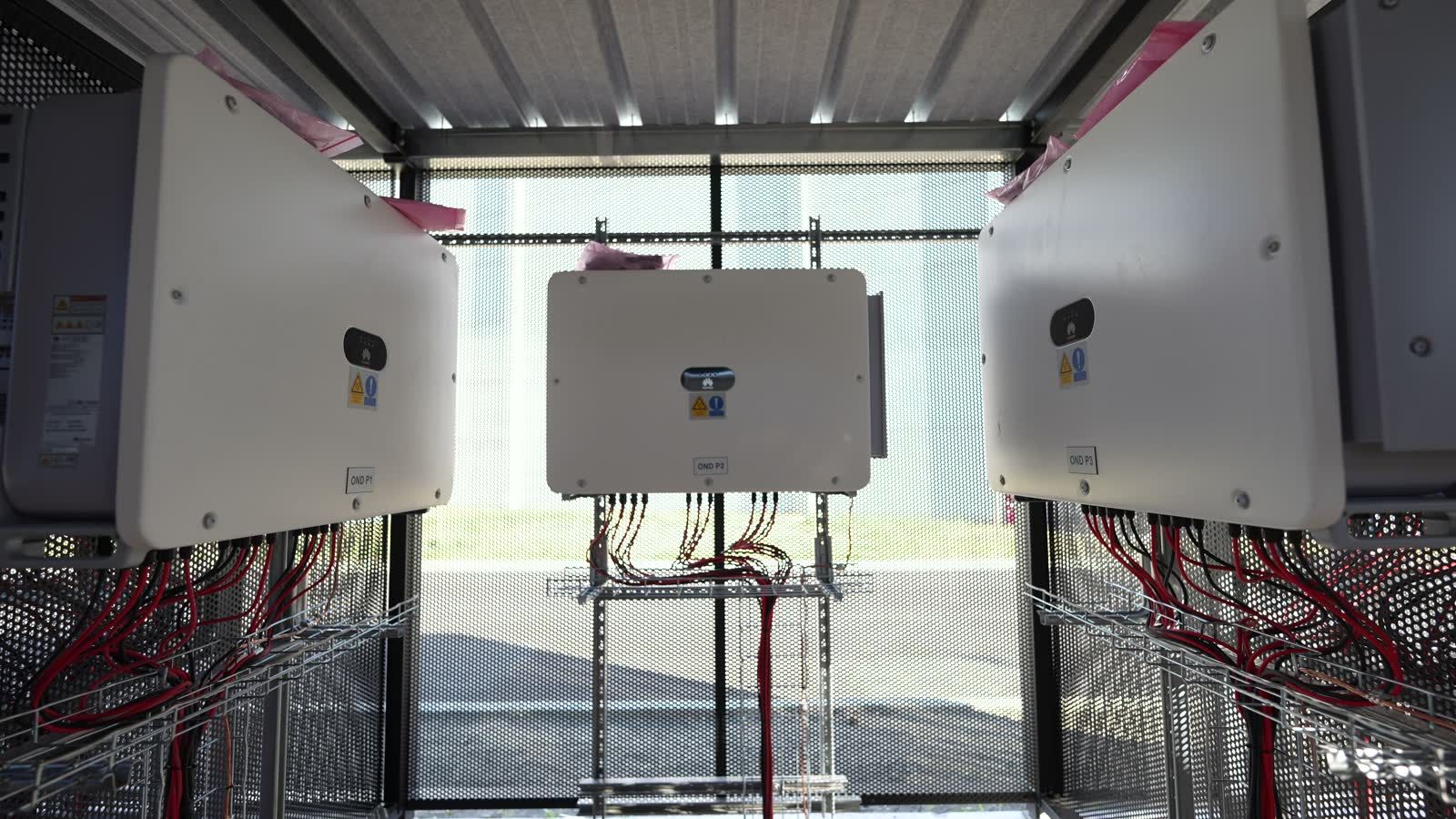
TURPE 7 and batteries: on a site that consumes electricity, France's grid tariff has no rate grid of its own for storage. The battery acts on what the meter sees, the power drawn and the energy withdrawn in each time band. This article sets out what TURPE 7 HTA-BT changes for an equipped site, using the Enedis tariffs in force on 1 August 2026, and how to take it into account when sizing.
What is TURPE 7 and since when has it applied?
TURPE is the tariff for the use of public electricity grids, set by the French energy regulator (CRE). TURPE 7 HTA-BT came into force on 1 August 2025 for around four years (decision no. 2025-78 of 13 March 2025). Its grid is indexed each year: it moved by 3.04% on 1 August 2026 (decision no. 2026-105 of 21 May 2026).
For a professional site, three of its components matter when studying a battery:
- the annual withdrawal component, made up of a power part and an energy part, per time band;
- the monthly component for exceeding subscribed power (CMDPS);
- the annual injection component, which is zero in HTA and low voltage.
How does TURPE 7 see a battery on a consuming site?
The Enedis brochure sets the principle: the tariff depends on the voltage level, the subscribed power and the physical flows measured at the connection point. For the grid, a battery installed behind the meter exists only through what it changes in those flows.
| Effect at the connection point | Component concerned | |
|---|---|---|
| Discharges during a peak | Lower power drawn | Subscribed power, CMDPS |
| Recharges from the grid in off-peak hours | Withdrawal added in a cheaper band | Energy part |
| Discharges in peak-rate hours | Withdrawal reduced in a dearer band | Energy part |
| Stores the surplus of an on-site plant | Less injection, then less withdrawal | Energy part |
| Feeds into the grid, if the contract provides for it | Injection flow | Injection component (zero) |
Two points are checked from the study stage. The battery's losses are withdrawn like the rest of the energy when it charges from the grid. And recharging can create its own peak: it is controlled below the subscribed power of the current band.
What are the time bands worth in the grids of 1 August 2026?
The grid shows the gap that control can target. Here are two extracts, for short and long utilisation. These are network tariffs, excluding supply and taxes: the total price per kWh also depends on the supply contract.
| Peak | HPH | HCH | HPB | HCB | |
|---|---|---|---|---|---|
| HTA, short utilisation, fixed peak | 5.91 | 4.36 | 2.05 | 1.04 | 0.71 |
| HTA, long utilisation, fixed peak | 2.73 | 2.16 | 1.51 | 0.95 | 0.70 |
| LV > 36 kVA, short utilisation | not applicable | 7.12 | 4.34 | 2.19 | 1.57 |
| LV > 36 kVA, long utilisation | not applicable | 5.86 | 3.58 | 2.07 | 1.54 |
| Peak | HPH | HCH | HPB | HCB | |
|---|---|---|---|---|---|
| HTA, short utilisation, fixed peak (€/kW/year) | 14.85 | 14.85 | 14.85 | 12.93 | 11.56 |
| HTA, long utilisation, fixed peak (€/kW/year) | 36.40 | 33.28 | 21.01 | 14.77 | 11.91 |
| LV > 36 kVA, short utilisation (€/kVA/year) | not applicable | 18.15 | 16.45 | 15 | 12.34 |
| LV > 36 kVA, long utilisation (€/kVA/year) | not applicable | 31.08 | 21.82 | 17.15 | 12.75 |
HPH, HCH: peak-rate and off-peak hours in the high season (currently November to March). HPB, HCB: peak-rate and off-peak hours in the low season. Source: Enedis brochure, tariffs at 1 August 2026.
The reading is instructive. Long utilisation weighs mainly on power: lowering a peak counts for more there. Short utilisation weighs more on energy: shifting kWh plays a larger part. A battery changes both terms at once, so the tariff option is reviewed with the battery, on the projected load curve. The free switching window opened by TURPE 7 closed on 31 January 2026, so the 12-month period since the last choice of option has to be checked.
Subscribed powers must also keep rising from one band to the next: a low power in low-season off-peak hours is only possible if the preceding bands are low too. That is why peak shaving is studied band by band, as in our article on exceeding subscribed power.
Why do the moved off-peak hours change battery control?
This is the most concrete change for an equipped site. The CRE decided to move off-peak hours towards the afternoon, when solar generation is abundant from April to October. The reform runs from autumn 2025 to the end of 2027, and the aim is for the great majority of customers to have afternoon off-peak hours, all year or in summer. Enedis estimates that 0.5 million points are concerned in LV above 36 kVA and in HTA (decision no. 2025-78).
Decision no. 2026-33 of 4 February 2026 clarified the placement rules:
| Existing off-peak hours to move | Off-peak hours to favour | |
|---|---|---|
| High season | 7 am to 11 am and 5 pm to 9 pm | Free placement |
| Low season | 7 am to 10 am and 6 pm to 11 pm | 2 am to 6 am and 11 am to 5 pm |
The same decision lifts the freeze that prevented new customers from being given off-peak hours between 11 am and 2 pm in the high season.
For a battery, the consequence is practical: a fixed "charge at night, discharge by day" programme may stop following the grid when the site's bands change. The control system has to read the actual calendar of the delivery point. A site with a solar plant also sees its off-peak hours move closer to its generation hours: solar surplus and grid recharging end up in the same slots, and the battery's energy is sized with both in mind.
Who is the injection-withdrawal component for?
This is what TURPE 7 brings that is new for storage, applicable since 1 August 2026. It is optional and replaces the standard withdrawal component. It encourages operation that runs counter to local grid peaks. It is not for every site with a battery: the Enedis note sets three cumulative conditions.
- Being standalone storage, which withdraws from and returns to the public grid exclusively. An installation coupled with generation or consumption is excluded.
- Being connected directly in HTA in the Enedis service area.
- Being attached to a primary substation on the list of eligible zones.
In October 2025 the CRE published a list of 320 injection zones and 1,121 withdrawal zones in HTA; Enedis publishes the up-to-date list with its note.
| Peak hours | Energy withdrawn at peak | Energy injected at peak | |
|---|---|---|---|
| Withdrawal zone | December to February, Monday to Saturday: 2 h between 8 am and noon, 2 h between 5 pm and 9 pm | +5.91 c€/kWh | -4.88 c€/kWh |
| Solar injection zone | 1 May to 2 September: 4 h between noon and 4 pm | -7.10 c€/kWh | +7.81 c€/kWh |
A negative coefficient reduces the network bill, without being able to make it negative over the calendar year. For a standalone storage developer, the study therefore starts with the target substation, and with how well these hours fit the battery's other uses, such as the services described in our article on how a battery earns revenue or on our aggregator page.
What if the site also generates electricity?
An individual self-consumer follows the same withdrawal rules as other consumers. Their management component depends on the contract: self-producers who feed in have a specific component, lower than the sum of the components of an injection contract and a withdrawal contract.
In collective self-consumption, the management component is increased, and an optional grid distinguishes self-produced and other withdrawals when all participants are downstream of the same HTA/LV substation. A battery in this setting is studied with the operation's allocation rules: our article on collective self-consumption and storage covers this point.
How do you build TURPE 7 into sizing a battery?
The method has five steps, with no result assumed in advance:
- Gather the data: twelve months of load curve, network bills, the contract, current and upcoming off-peak bands.
- Identify the main lever: peaks and overruns, the gap between bands, solar surplus. Each site has its own.
- Simulate the curve with the battery, charging and losses included, on the actual calendar of the delivery point.
- Recalculate TURPE by option, short and long utilisation, with subscribed powers adjusted band by band.
- Test the future calendar: a properly sized system should stay relevant when off-peak hours move, which argues for configurable control.
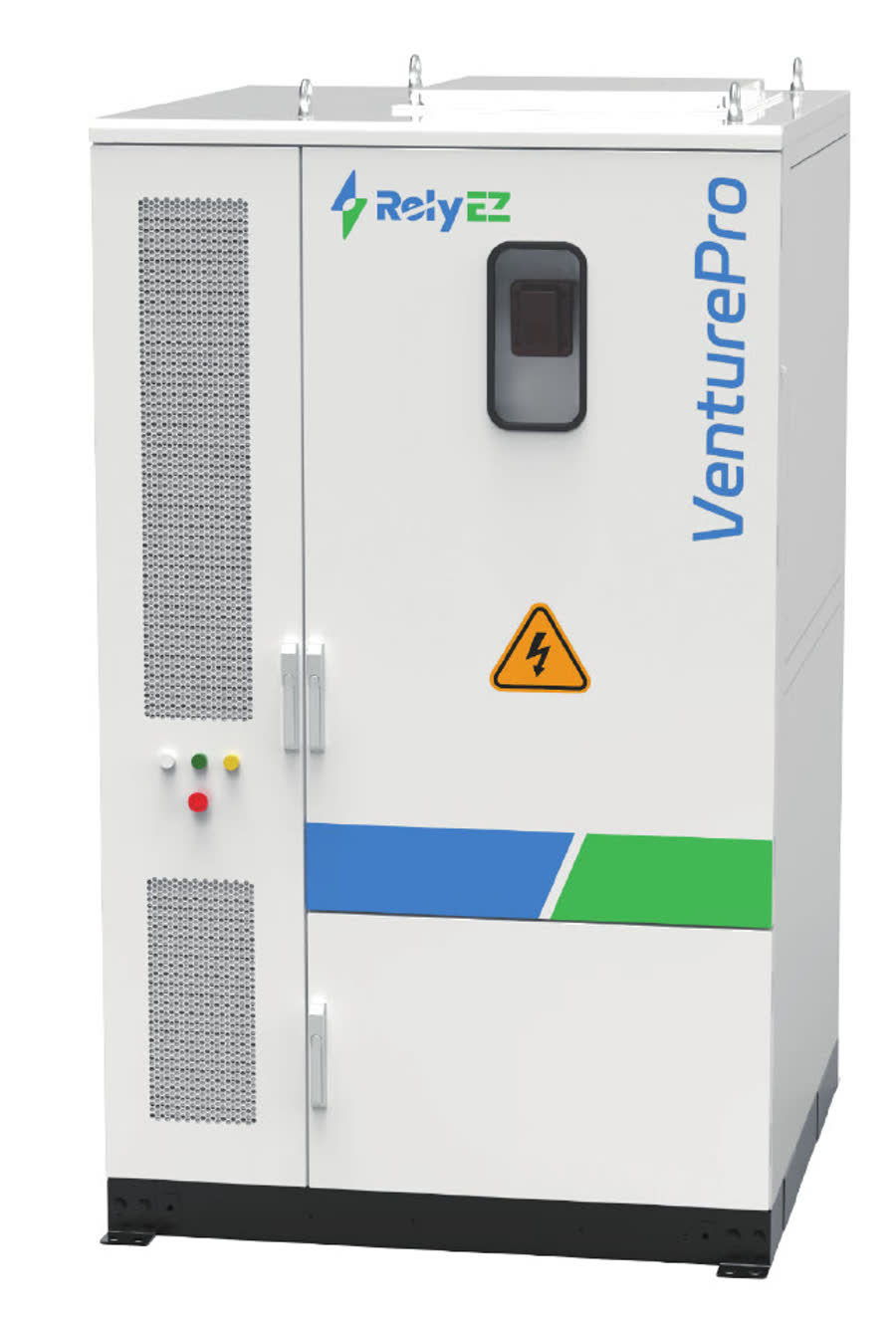
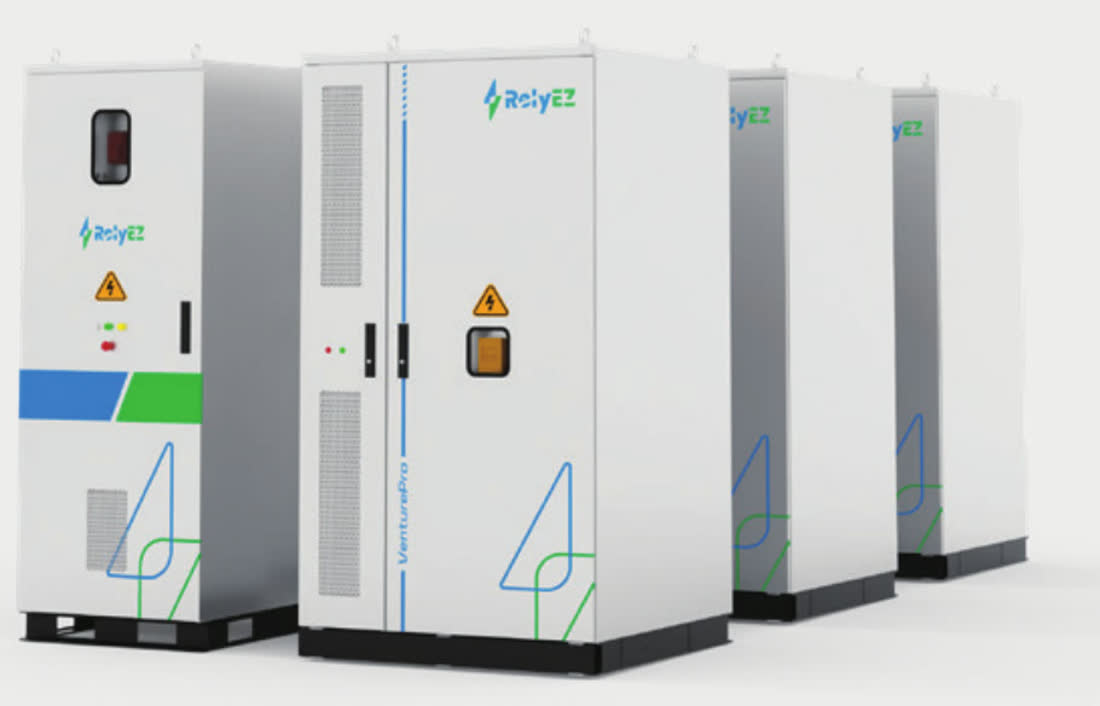
The range is then chosen according to the power and energy selected. A VenturePro cabinet delivers 125 kW and stores 250 kWh (RelyEZ datasheet). The Fusion 2 range runs from 261 kWh and 130.6 kW to 3.34 MWh, with one control cabinet and up to eight battery cabinets.
TURPE is only part of the bill and only part of a battery's value: the study combines it with supply and the site's other uses. To compare these options on your own data, you can request a diagnostic with your load curve and network bills.
Frequently asked questions
Does TURPE 7 bill the charging of a battery?
On a consuming site, yes, when the charge comes from the grid: the tariff is based on the physical flows measured at the connection point. Energy withdrawn to charge the battery follows the rate of the current time band. Charging from the surplus of an on-site solar plant does not pass through the connection point, so it is not counted there.
Does electricity fed back by a battery pay TURPE?
In HTA and low voltage, the annual injection component is zero, according to the Enedis brochure of 1 August 2026. The other components remain due, notably management and metering. Feeding in also requires a contract and a connection that provide for it.
Can an industrial site with a battery take the injection-withdrawal component?
No, if it consumes or generates on site. The option is reserved for standalone storage, which withdraws from and returns to the public grid exclusively. The definition excludes installations coupled with generation or consumption. The site must also be connected directly in HTA and attached to a primary substation on the published list.
How do I find my off-peak hours under TURPE 7?
They are set locally by the grid operator and provided to anyone who asks. The reform runs from autumn 2025 to the end of 2027, and the same customer may have different off-peak hours in summer and winter. Before setting a battery's control strategy, check the time bands of the delivery point concerned.
Should you change tariff option when installing a battery?
The question is worth asking, because the battery changes both the power drawn and the energy withdrawn in each band. Short and long utilisation split the bill differently between power and energy. The comparison is made on the projected load curve, with the battery in service.
Sources
The figures in this article come from these documents.
- Tarifs en vigueur au 1er août 2026 — TURPE 7 HTA/BT, tarifs d'utilisation des réseaux publics de distribution d'électricité — Enedis, 1 August 2026
- TURPE Injection – Soutirage : définition des zones éligibles et modalités d'application (Enedis-MOP-CF_116E, version 2) — Enedis, 1 June 2026
- Délibération n° 2026-33 du 4 février 2026 portant modification des tarifs d'utilisation des réseaux publics de distribution et transport d'électricité (TURPE 7 HTA-BT et TURPE 7 HTB) — Commission de régulation de l'énergie, 4 February 2026
- Délibération n° 2026-105 du 21 mai 2026 portant décision sur l'évolution au 1er août 2026 de la grille tarifaire des TURPE dans les domaines de tension HTA et BT — Commission de régulation de l'énergie, 21 May 2026
- Délibération n° 2025-78 du 13 mars 2025 portant décision sur le tarif d'utilisation des réseaux publics de distribution d'électricité (TURPE 7 HTA-BT) — Commission de régulation de l'énergie (Légifrance), 13 March 2025
- La CRE communique sur les zones éligibles à la composante d'injection-soutirage introduite dans le TURPE 7 — Commission de régulation de l'énergie, 9 October 2025
- Fiche technique VenturePro Series 250 kWh — RelyEZ, 27 August 2026
- Fiche technique VenturePro Fusion — Liquid-Cooled Modular Battery Cabinet System — RelyEZ, 27 August 2026
The ranges mentioned
A project in mind?
The grid connection, the contract and the generation already in place are enough to know which range fits.